Mary is clearBorder’s chairwoman, responsible for providing a sounding board for the CEO and internal team and assuring corporate governance. Mary has extensive expertise in risk, governance and strategy, having worked at senior levels across the public and private sectors.
Her government career spanned law enforcement, counter terrorism and national security, latterly as Director General for Crime, Policing and Fire in the Home Office. On leaving government, Mary joined McKinsey & Company, serving government and private sector clients around the world. She now holds a number of non executive director and trustee roles in public and private sector organisations and works as an independent consultant.
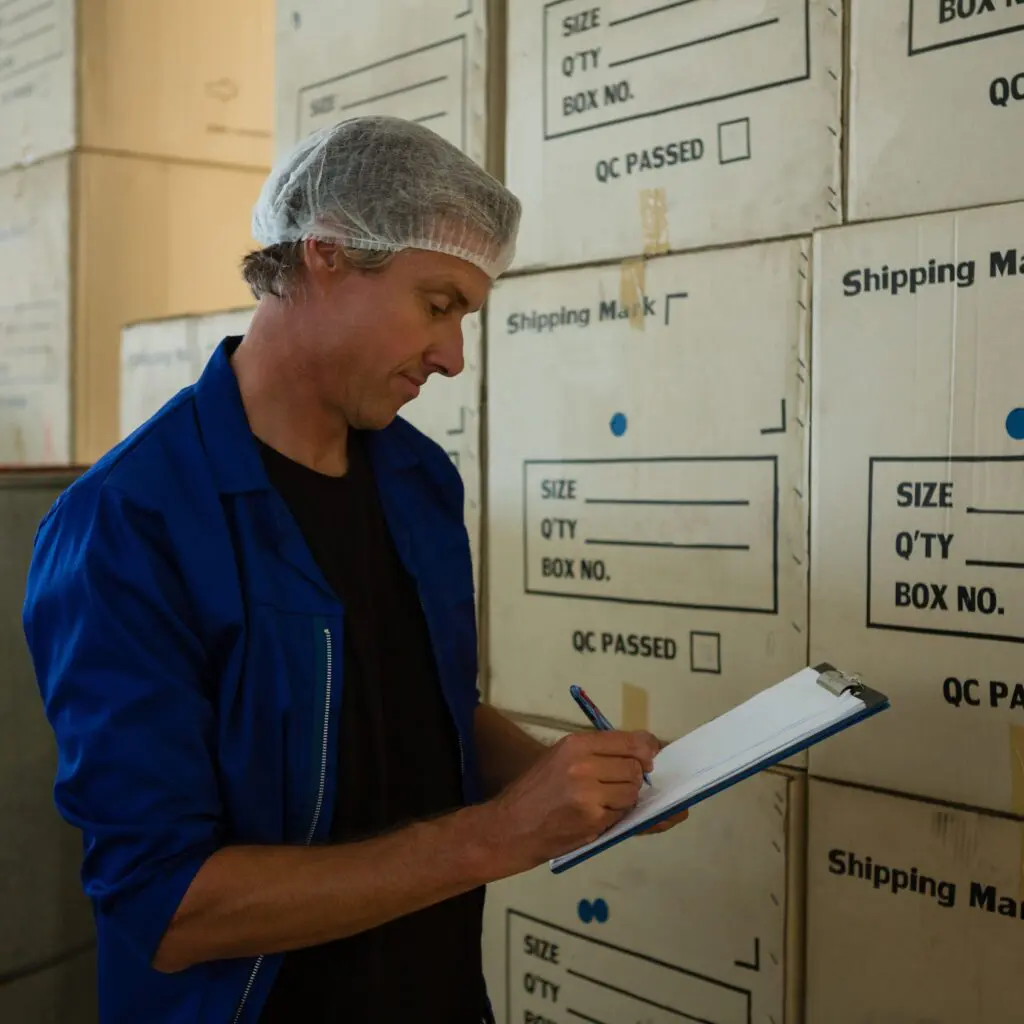
TLDR Effective customs record keeping is critical for compliance, risk management, and operational resilience in global trade. This article explores legal requirements, common pitfalls, and 10 best practices (from digital systems and accurate classification to staff training and audit preparedness), helping business leaders embed a proactive record-keeping culture to safeguard the organisation and support strategic decisions. In today’s trading environment, customs record keeping is less ‘bureaucratic afterthought’ and more ‘operations cornerstone’, as it represents a nuanced blend of risk management, commercial agility, and regulatory trust. As global supply chains face more audits, digital scrutiny, and post-clearance checks, boardroom decision-makers must treat record keeping as a strategic function – not just an administration task. Poor record keeping can cost heavily: retrospective duty demands, fines, shipment holds, reputational damage, and even loss of market access. Conversely, robust documentation helps smooth customs audits, defend origin or valuation claims, reduce query delays, and bolster credibility with authorities and trading partners. This article explores: The legal and regulatory requirements businesses must meet (UK and international context) A detailed breakdown of what records to keep, and for how long 10 best practices that turn record keeping from compliance burden into a competitive advantage Common pitfalls and culture shifts needed for robust operations Why this matters Boardrooms and leadership teams that treat record keeping as a strategic discipline – not just a cost centre – protect margins, reduce audit risk, and signal operational maturity to investors, regulators, and customers alike. Seeking independent assistance with your company’s customs record keeping? Contact clearBorder today → Customs record keeping requirements To stay compliant and defensible, businesses must understand the legal and regulatory frameworks governing customs record retention, format, and content. Below are the key dimensions UK and international traders should monitor. What records are required Customs law expects traders to maintain a full, auditable trail. Core documents typically include: Import/export declarations and entry records Invoices and purchase orders Transport and logistics documents (bills of lading, airway bills, packing lists) Customs tariffs, classification, valuation calculations Origin and preference supporting documents (certificates of origin, supplier declarations) Licenses, permits, quotas, regulatory approvals Correspondence, amendments, adjustments, customs rulings Warehouse, inventory, duty payment records Internal audit logs, system change records, customs compliance reviews Any other documents that directly support a customs transaction How long records must be kept In the UK, records relating to customs declarations must generally be preserved for 4 years from the date the relevant declaration is made. For importers using simplified customs procedures, declarations must be backed by supporting records retained for 4 years post-submission. In some cases (especially with excise or certain licensing regimes), the 4-year period may extend to 6 years, and exceptions may require HMRC permission for early disposal. For certain tax and VAT purposes, accounting and financial records typically must be kept for 6 years under UK law. On the international front, U.S. exporters must maintain export documentation for 5 years under applicable federal regulations. These records must be in a form that allows customs authorities to trace the history, examine the details, and verify claims. HMRC and international standards (WTO / WCO) Under UK law, the Customs (Records) (EU Exit) Regulations 2019 require persons with customs obligations to keep and preserve records specified by HMRC notices, in the form and for the time set out. The Customs Traders (Accounts and Records) Regulations 1995 also mandate that records supporting a customs declaration be preserved for four years (or as HMRC may specify). Internationally, the WTO / Revised Kyoto Convention and related instruments require members to maintain information and documents for reasonable record periods (often not less than five calendar years) to support customs supervision and audit. Many customs administrations encourage or mandate electronic record keeping, as part of modernisation and trade facilitation initiatives such as the WTO Trade Facilitation Agreement. Book a Consultation Ready to get expert help? Book a consultation today and take the next step. Book Your Consultation 10 best practices for customs record keeping More than just keeping HMRC happy, strong record keeping means creating a robust, resilient compliance culture that protects value and gives businesses room to grow. Here are ten best practices that leading organisations follow. 1. Build compliance into your culture, not just your filing system Record keeping should not sit in a dusty back office. It has to be embedded into the daily rhythm of your business. Companies that treat customs documentation as a shared responsibility across finance, logistics, procurement, and legal are significantly better placed to withstand audits. Because customs compliance is not a “single-team sport” – it requires alignment between every function that touches goods crossing borders. A cross-functional mindset ensures fewer gaps and faster responses when authorities request evidence. 2. Maintain digital-first, searchable records Paper binders are a liability. Robust, future-facing businesses adopt digital customs record keeping platforms that are searchable, secure, and auditable. This speeds up responses to HMRC queries, avoids physical storage risks, and ensures continuity if staff leave. Consider things like: Cloud-based platforms that meet HMRC standards for digital records Automated timestamping for version control Encryption and role-based access permissions A 2023/24 WCO survey noted “a rapid evolution toward digitalization [sic]” of customs documentation, with customs administrations generally expecting electronic records as the norm (with paper used only as a fallback). Businesses should respond in kind. 3. Align retention periods across departments One of the most common pitfalls is inconsistency: finance might keep records for six years, logistics for four, procurement indefinitely. These discrepancies create gaps in the audit trail when HMRC comes knocking. Rather than having every record last the same length of time, the solution is making sure every department understands and applies the correct legal standard for its relevant records. Practical step → Create an organisation-wide retention policy matrix that clearly maps out the different legal retention periods (customs, VAT, ESG, etc.), and who owns each record type. This fosters both consistency and compliance: no overlaps, no gaps, and no surprises when the auditors call. Record type Retention period Owner department Import declarations 4 years Logistics / Customs VAT invoices 6 years Finance Origin certificates 4-6 years Procurement Licenses / Permits 6 years+ Compliance / Legal This reduces risk of premature disposal or inconsistent evidence trails. 4. Keep origin documentation watertight Set against the backdrop of a turbulent moment for geopolitics, rules of origin disputes are a growing source of friction. Fortnum & Mason’s recent tariff dispute with U.S. customs (where tea blended in Newcastle was deemed “Indian” or “Chinese” in origin) shows how serious the stakes can be. Best practice → Maintain supplier declarations, long-term supplier statements, and certificates of origin in a structured archive. Reconcile them annually against procurement data. Failure here may trigger back-duties. It can also destroy preferential trade benefits under free trade agreements. 5. Record the “why” behind classifications and valuations It’s not enough to show the customs code or declared value; authorities increasingly want to see how you arrived there. That means keeping: Internal classification rulings or rationale notes Email chains with suppliers clarifying product specs Evidence of methodology used to calculate customs value When challenged, having this paper trail is typically the difference between a quick resolution and an expensive dispute. 6. Prepare for audit before it happens Customs audits are a “when,” not an “if.” Businesses that commit to horizon scanning and conduct mock audits every 18–24 months are drastically better prepared for when the real thing does arrive. As a case in point, Siemens – a company which considers compliance as falling directly within the purview of CEO Roland Busch – runs quarterly compliance drills where auditors request sample declarations and records. This not only improves performance but reassures senior leadership that risks are being actively contained. As Siemens says itself: “it is essential for Siemens, as a globally operating company, to comply with the export control regulations that apply to national and international trade.” Businesses that adopt a similar level of proactivity will stand themselves in good stead as we near the 2030s. 7. Train your teams to spot weak links Even in the present day, though, the majority of customs errors still stem from human oversight, not systems. To borrow a statistic from the world of cybersecurity, almost three-in-four (74%) of data breaches are the result of human oversight, underscoring the value and importance of fully capable, equipped teams. Training, therefore, is non-negotiable. But it doesn’t have to be dry – for instance: Run ‘red team’ exercises where staff deliberately introduce errors for others to catch Use gamified platforms to test knowledge of record retention rules Bring in external customs specialists annually to refresh best practice 8. Use technology to track and trace in real time Manual spreadsheets can’t cope with today’s trade complexity. Leading firms now use blockchain, IoT sensors, and AI-driven platforms to automatically log movements and create immutable records. For example, Maersk and IBM’s TradeLens platform (now retired, but nonetheless instructive) proved that shared, tamper-proof records could dramatically cut disputes between customs, carriers, and shippers. Expect the next generation of platforms to run where TradeLens walked. Additionally, it’s always worth keeping an eye on WCO pilot projects in this space. 9. Integrate customs with ESG and supply chain risk data Customs records are increasingly being linked to broader obligations: forced labour audits, carbon border adjustment mechanisms (CBAM), and supply chain transparency laws, for instance. Keeping customs documentation siloed misses the bigger picture. Instead, forward-looking businesses are actively integrating customs records with: ESG reporting frameworks Carbon accounting data Supplier due diligence platforms This allows companies to respond to customs authorities rapidly; not only when asked, “where are your goods from?”, but also “were they produced sustainably and legally?” 10. Treat record keeping as strategic intelligence Finally, the best businesses don’t just archive records. They analyse them. Handled accurately and manipulated deftly, customs data can provide tremendous visibility into issues such as supplier reliability, landed cost trends, and tariff exposure. Unilever for example (which by its own admission “uses a risk based approach to determine which supplier sites need to undergo additional due diligence”) manipulates customs data to identify suppliers prone to delays, and diversify proactively from there. To put it another way; what started as a compliance obligation has, for Unilever, become a strategic tool for procurement, reputation, and supply chain optimisation. In this way, records can transcend their basic function of “proof of yesterday’s shipments”, becoming raw intelligence for tomorrow’s biggest boardroom decisions. Common pitfalls, and how to avoid them Even well-intentioned businesses can stumble when it comes to customs record keeping. One common mistake is treating records as an afterthought: filing them reactively rather than embedding them into operational workflows. This leads to gaps or inconsistencies that might only surface during an audit, when it’s too late to fix them. Another pitfall is relying on paper or fragmented systems. In a digital-first regulatory environment, paper records are prone to loss, damage, and delays in retrieval. Similarly, when departments maintain separate systems with different retention policies, the result is a patchwork of incomplete evidence. Regulators are unlikely to accept “we couldn’t find it” as an excuse. Moreover, businesses frequently underestimate the importance of documenting rationale – that is, why a product was classified under a certain code, or how a customs value was determined. Without a clear audit trail, even accurate declarations can be challenged, leading to penalties and reputational risk. Building a proactive record keeping culture The thread running through this is that customs record keeping is not a regulatory tick-box. It is an enabler of resilience, transparency, and strategic agility. From embedding compliance into culture, to leveraging technology for traceability, to turning records into actionable intelligence – the businesses that lead are those that go beyond minimum requirements. Proactivity is the differentiator. A company that conducts internal audits, trains its staff to spot errors, and aligns its customs processes with broader ESG and supply chain risk frameworks is creating a very real competitive advantage. As global trade grows more complex, customs authorities, investors, and consumers alike are looking for signals of trust. Robust records send that signal. For boardroom business leaders, the message is this: adopt best practices for customs record keeping to avoid costly disputes, improve operational efficiency, and strengthen the ability to trade with confidence in volatile markets. The goal is not only to see traded goods waved through the next audit, but at an operational level, to position your business for long-term, sustainable growth. Contact clearBorder today for more specialised customs guidance →
Embarking on the journey to expand your business globally is akin to exploring new horizons. The allure of tapping into fresh markets, reaching an expansive audience, and increasing revenue is undeniable – research from PwC shows that almost 50% of CFOs are currently expanding their business overseas – however, according to Remote, the UK (and London) rank at a lowly 18th in the index of international ‘global expansion score.’ (The US, Singapore, and Ireland occupy the top three positions, in case you wondered.) Clearly, for UK businesses, venturing into international markets demands strategy and precision. And that’s exactly the reason the clearBorder team put together these 10 steps to expanding your business globally. With our proven expertise in international trade, we help answer the question: how to expand your business globally? These strategies provide insights, advice, and actionable guidance to steer your business through the complexities of globalisation. As you set sail on this transformative journey, use this guide as your compass, aligning your strategy with the global market’s demands. By the end of this article, you’ll be equipped with the knowledge to navigate regulatory landscapes, adapt to diverse business cultures, and position your brand for international success. Let’s uncover the 10 key steps to expanding your business globally… Step 1 – Prepare Your Business For Growth First things first: embarking on global expansion entails a strategic recalibration. Embrace a digital transformation mindset, using technologies to optimise operations and enhance adaptability. Organisational agility and scalable infrastructure will be non-negotiable essentials as you gear up for international growth. For instance, consider a software company transitioning from domestic to global markets. By implementing advanced software tools for remote collaboration and data management, they enhance cross-border workflow efficiency. The same applies to cross-border goods movements. Importing and exporting will require you to manage information and workflows carefully and efficiently. Step 2 – Understand the Global Landscape Before you launch into full strategy execution, and start embracing the opportunities of international markets, building a clear picture of the international landscape is imperative for UK businesses. Here are a few ways you can increase your and your team’s knowledge base: Spend time reading market research to grasp consumer behaviours, trends, and demands across borders. Engage in specialist trade training courses to understand the workflow, administration and information demand trading across borders requires. Leverage resources like trade associations, market reports, and government data to comprehensively comprehend global industry landscapes. Connect and network with contacts; whether in your industry or operating overseas. Ultimately, the goal is to unveil potential niches and tailor your offerings accordingly. This proactive understanding helps you align your strategies with diverse markets, allowing you to capitalise on opportunities and confidently navigate challenges on the global stage. Step 3 – Craft an Effective Global Expansion Strategy Now comes time for your target markets and audiences to take centre stage. Imagine a British clothing brand eyeing markets beyond the UK and Europe – to resonate with trends in Indonesia, for instance, they adapt a fashion line to align with regional aesthetics and preferences. This precision is vital to ensure a connection with the target audience. Developing a solid business expansion plan is equally vital. This plan would outline your objectives, timelines, and resource allocation. For our hypothetical clothing brand, it means determining factors such as: the pace of store openings, multilingual considerations, supply chain adjustments, and digital presence enhancement. Adapting products and services for different markets then comes into play. Let’s say our clothing brand, through thorough market research, realises that specific cultural nuances and climate factors influence buying decisions – so, they tailor their collections accordingly. These steps are the guiding stars of success. They steer your business expansion toward a sustainable course; meticulous planning minimises risks while magnifying opportunities. Contact us now for assistance developing your global expansion strategy. Step 4 – Navigate International Regulations Each country has distinct regulations, from product safety standards to labelling requirements. Concurrently, managing taxation and legal considerations is paramount. Navigating tax codes, customs duties, and understanding legal frameworks ensures smooth cross-border operations. These tasks are pivotal for maintaining a seamless and ethical international presence. They safeguard against potential legal entanglements while optimising financial efficiency, so be sure to stay abreast of ever-evolving regulations and align your operations with local compliance requirements. Ultimately, this will reinforce your global expansion’s resilience and longevity. Step 5 – Build the Right Team for Global Success Assemble cross-cultural and multilingual teams adept at decoding diverse markets (Business News Daily). They’ll delve into market research, find ways to overcome time zone challenges, and ensure cultural nuances are respected in marketing campaigns and product launches. Your team, after all, is the mechanism enacting your global ambitions. They bridge gaps, customise strategies for local resonance, and foster seamless communication across regions. Step 6 – Tailor Your Marketing Approach Adapting operations to diverse cultures is more than a courtesy. It’s a strategic imperative, especially when it comes to marketing. To underscore the significance, envision a worst-case hypothetical scenario: a global campaign that inadvertently offends cultural sensibilities, leading to widespread backlash and severe brand damage. In stark contrast, consider some real-world exemplaries of global marketing done right: Red Bull – the Austrian drinks giant adapts so well to all audiences and regions that many Americans assume it’s a sure-fire US company. Fenty – Rihanna’s cosmetic brand focuses heavily on an element of inclusivity, offering and highlighting an incredibly diverse range of skin foundation shades. Domino’s – Like McDonald’s, KFC, and many other fast food multinationals, Domino’s tailor their menu to specific geographical tastes. Nike – Around the world, Nike is famous for securing partnerships with locally-celebrated athletes and sporting heroes. Brands like these meticulously adapt their marketing strategies for different regions, ensuring campaigns resonate authentically. This entails more than just translation – it involves localising content, incorporating regional influencers, and addressing specific pain points that matter to each audience. This level of meticulous customisation not only secures strong engagement but also fosters enduring brand loyalty. Step 7 – Mitigate Risks and Challenges Expanding globally comes with a myriad of challenges, from currency fluctuations to communication barriers and local political issues. Navigating time zone adjustments and regulatory complexities can also be daunting. Mitigating these risks involves proactive strategies. Employing financial instruments like hedging can safeguard against currency volatility. Leveraging technology for remote communication bridges geographical gaps. Cultivating a keen understanding of local politics informs decision-making. Moreover, assembling a team adept at crisis management enhances risk readiness. While global expansion is rife with uncertainties, enlisting the expertise of cross-border consultancy ensures that your supply chains remain intact, even in the face of expansion challenges. Step 8 – Learn From Global Expansion Success Stories Use real-world examples of business triumphs as your guiding lights. Study what the most successful globally-expanded organisations in your niche have done, and aim to emulate the pillars of their success. Case studies, along with proven partnerships, can illuminate the strategies that propelled companies towards an improved international presence. Earlier, we saw some examples of brands that executed a global expansion strategy with aplomb; other headline instances would include companies like Toyota, Apple, Unilever, or Zara (Born to be Global). The point is not to see these organisations as your competitors; rather, it’s to learn from their success, and use it as a blueprint for your own. Step 9 – Conduct Thorough Market Research and Analysis As you’d expect, understanding consumer behaviour in international markets demands a commitment to research and improvement. Engage local experts and immerse yourself in the local culture, and harness technology to collect and analyse data efficiently, using tools like predictive analytics and AI-driven insights. Moreover, efficient data analysis transforms raw information into actionable strategies. Identify patterns, preferences, and emerging trends, and utilise this knowledge to tailor products, marketing, and customer experiences. In the global arena, knowledge is power – and, by adeptly deciphering market dynamics, you enhance your competitive edge significantly. Step 10 – Partner With Cross-Border Specialists Taking the above as read, a little knowledge can be a dangerous thing. While you can arm yourself with the skills and tools to execute a global expansion strategy, there really is no substitute for the guiding hand of expertise. Partnering with clearBorder brings trade consultancy that secures your global endeavours, giving access to insights that help you navigate complexities – from regional regulations to local practices – ensuring better-informed decisions. We offer specialist consultancy in: Customs compliance Export control compliance SPS control compliance Similarly, you can empower your team with clearBorder training modules. These specialised resources provide the edge by imparting cross-border skills, equipping your team to thrive in diverse markets. Currently, we can provide training in: Border-ready plants and plant products Importing and exporting Border-ready food and animal products The Global Expansion Imperative In an era of fierce competition and evolving markets, UK businesses face increasing pressure to embark on the path of global expansion. This urgency is underscored by factors like Brexit, which have redefined trade dynamics. However, this journey is fraught with challenges, from navigating unfamiliar regulatory landscapes to adapting to diverse cultural nuances. Yet, the rewards of global expansion are undeniable. Consider the following benefits: Diversified Revenue Streams: Expanding into new markets safeguards against economic fluctuations. Increased Profitability: Tapping into a broader consumer base amplifies revenue potential. Enhanced Brand Recognition and Market Presence: Establishing a global footprint elevates brand visibility and trust. Access to New Customers: International expansion opens doors to fresh customer segments. Amid these complexities and possibilities, our 10 key steps to expanding your business globally can be extremely helpful. For more bespoke guidance and tailored insight, contact us and embark on your international growth journey with confidence. Book a Consultation Ready to get expert help? Book a consultation today and take the next step. Book Your Consultation
When compliance meets geopolitics Recently, I attended the recent Defence Export Conference held in London, an event that has been running for several years. There was a good mix of attendees from industry, regulators, and law. A number of large defence and aerospace companies from the UK, Europe and the U.S. were also represented, such as BAE Systems, Rolls Royce, Nammo and Boeing, to name just a few. Here’s what I learned. TLDR The 2025 Defence Export Conference made one thing clear: compliance has moved from the back office to the boardroom. From AI-driven data and rising enforcement to new transparency laws and shifting global alliances, future-first trade leaders must now treat compliance as a strategic lever, not as a cost centre. The big picture The 2025 Defence Export Conference brought together industry leaders, regulators and legal experts to discuss how compliance, technology and geopolitics are reshaping defence trade. Several common themes emerged, including: The rise of economic statecraft The use of tariffs, sanctions and trade agreements – as seen in the U.S., where President Trump has used tariffs in particular to force governments to change the way they trade with the U.S., as well as a control mechanism to address issues such as fentanyl imports from Canada to the States. Enforcement escalation The U.S. is expected to announce five new Consent Agreements prior to the end of the year – a big increase from recent years. The Trump administration is rigorously pursuing companies breaching export control regulations, likely enabling diversion of controlled goods to prohibited/sanctioned countries and persons. Due diligence and screening, therefore, factor as essential parts of a robust compliance program. Compliance as a market enabler Delivering compliance was perhaps the most-discussed topic in the conference, with speakers describing compliance as both: An enabler through market access using licensing, transportation and new regulations A partnership builder Moreover, speakers discussed moving compliance from a cost centre to a strategic function in its own right, in an effort to shift the focus from reactive fixing to proactive action in the C-suite investing in compliance. Compliance = competitiveness Resilience = anticipation of risk Strategy = compliance aligned Data and AI One speaker described how the company he worked for – one of the biggest defence organisations – looked at transactional activity and common tasks that could be done with AI, thereby reducing the need for staff. They also shared some thoughts on delivering data required by the boardroom; to capture stakeholder attention, and help convey the importance of compliance. Geopolitics, technology, and emerging risks Within the ASEAN region, a poll had shown that – in trade – China is now the preferred partner to the U.S., with 50.4% in favour of China. On a separate note, warfare was described as more cost-effective through the use of new technologies in UAV capabilities, as opposed to multi-million dollar aircraft. This throws up a few important questions: are there concerns around infringement on MTCR? How will this be dealt with by regulators? And will traditionally-held definitions change? What the regulators are signalling EAR The program allowing free export of semiconductor manufacturing technology to fabricators in China has been terminated by the U.S. government, which is ending the Validated End User program for Chinese facilities. This action requires the likes of TTSMC and Samsung to apply for specific licences for any advanced technology they wish to send to their Chinese factories. While licences may be granted for existing operations, they will not be approved for expanding capacity or upgrading technology – effectively cutting off China’s access to the most advanced manufacturing processes. BIS Guidance issued for financial institutions emphasises the risks tied to Russia and China, creating possible Prohibition 10 violations for facilitation of unlawful trade. This guidance aims to prevent financial institutions from inadvertently violating the EAR by financing transactions that involve controlled items to these countries. To comply, BIS recommends enhanced due diligence, screening customers against restricted party lists, using post-transaction review to red flags, and avoiding wilful blindness to potential violations. Norway Transparency laws are enabling NGOs to attack customers and business partners using human rights legislation. The legislation applies to all larger companies domiciled in Norway, as well as foreign companies selling goods and services in the country. “Larger companies”, in this sense, are defined through the Norwegian Accounting Act. Companies exceeding the threshold for at least two of the following three criteria are covered by the Act: An annual turnover of at least NOK 70 million Balance of at least NOK 35 million An average number of 50 full-time employees or the equivalent annual man-hours NGOs also challenge ‘critical decisions’, and how that impacts ‘critical supply chains’. Companies are required to: Implement and carry out a due diligence process in line with the OECD Guidelines Publish due diligence strategies Transparently communicate human rights due diligence procedures, risks, activities, and findings on request Companies violating the law (or even failing to meet the requirements) face the risk of injunction or fines – so don’t wait until the last minute to start complying. Human rights challenges In Germany, lawyers have brought a case against the German government and defence companies for supplying Israel with defence articles for use in Gaza – claiming this breaches German human rights laws. Book a Consultation Ready to get expert help? Book a consultation today and take the next step. Book Your Consultation Building compliance from day one At a boardroom level, perhaps the most significant takeaway from the Defence Export Conference was the need to plan early for how compliance will work in: Projects Licence planning Applications These are the keys to success. As the conference made clear, export compliance is moving from the back office to the boardroom. Those who plan early – integrating licensing, data and governance – will not only stay compliant, but strengthen their global competitiveness. Contact clearBorder today for independent, expert trade consultancy →