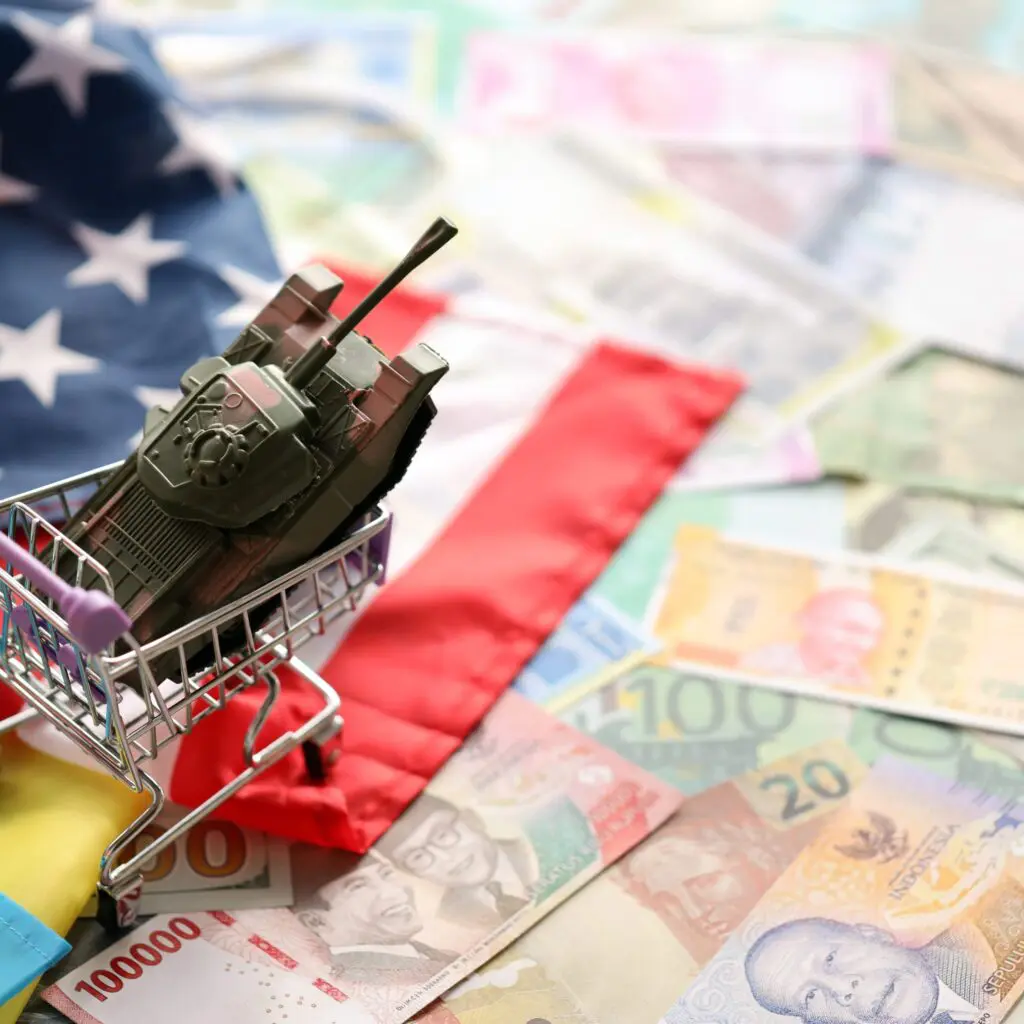
When compliance meets geopolitics
Recently, I attended the recent Defence Export Conference held in London, an event that has been running for several years.
There was a good mix of attendees from industry, regulators, and law. A number of large defence and aerospace companies from the UK, Europe and the U.S. were also represented, such as BAE Systems, Rolls Royce, Nammo and Boeing, to name just a few.
Here’s what I learned.
| TLDR
The 2025 Defence Export Conference made one thing clear: compliance has moved from the back office to the boardroom. From AI-driven data and rising enforcement to new transparency laws and shifting global alliances, future-first trade leaders must now treat compliance as a strategic lever, not as a cost centre. |
The big picture
The 2025 Defence Export Conference brought together industry leaders, regulators and legal experts to discuss how compliance, technology and geopolitics are reshaping defence trade.
Several common themes emerged, including:
The rise of economic statecraft
The use of tariffs, sanctions and trade agreements – as seen in the U.S., where President Trump has used tariffs in particular to force governments to change the way they trade with the U.S., as well as a control mechanism to address issues such as fentanyl imports from Canada to the States.
Enforcement escalation
The U.S. is expected to announce five new Consent Agreements prior to the end of the year – a big increase from recent years.
The Trump administration is rigorously pursuing companies breaching export control regulations, likely enabling diversion of controlled goods to prohibited/sanctioned countries and persons.
Due diligence and screening, therefore, factor as essential parts of a robust compliance program.
Compliance as a market enabler
Delivering compliance was perhaps the most-discussed topic in the conference, with speakers describing compliance as both:
- An enabler through market access using licensing, transportation and new regulations
- A partnership builder
Moreover, speakers discussed moving compliance from a cost centre to a strategic function in its own right, in an effort to shift the focus from reactive fixing to proactive action in the C-suite investing in compliance.
Compliance = competitiveness
Resilience = anticipation of risk
Strategy = compliance aligned
Data and AI
One speaker described how the company he worked for – one of the biggest defence organisations – looked at transactional activity and common tasks that could be done with AI, thereby reducing the need for staff.
They also shared some thoughts on delivering data required by the boardroom; to capture stakeholder attention, and help convey the importance of compliance.
Geopolitics, technology, and emerging risks
Within the ASEAN region, a poll had shown that – in trade – China is now the preferred partner to the U.S., with 50.4% in favour of China.
On a separate note, warfare was described as more cost-effective through the use of new technologies in UAV capabilities, as opposed to multi-million dollar aircraft.
This throws up a few important questions: are there concerns around infringement on MTCR? How will this be dealt with by regulators? And will traditionally-held definitions change?
What the regulators are signalling
EAR
The program allowing free export of semiconductor manufacturing technology to fabricators in China has been terminated by the U.S. government, which is ending the Validated End User program for Chinese facilities.
This action requires the likes of TTSMC and Samsung to apply for specific licences for any advanced technology they wish to send to their Chinese factories. While licences may be granted for existing operations, they will not be approved for expanding capacity or upgrading technology – effectively cutting off China’s access to the most advanced manufacturing processes.
BIS
Guidance issued for financial institutions emphasises the risks tied to Russia and China, creating possible Prohibition 10 violations for facilitation of unlawful trade.
This guidance aims to prevent financial institutions from inadvertently violating the EAR by financing transactions that involve controlled items to these countries. To comply, BIS recommends enhanced due diligence, screening customers against restricted party lists, using post-transaction review to red flags, and avoiding wilful blindness to potential violations.
Norway
Transparency laws are enabling NGOs to attack customers and business partners using human rights legislation.
The legislation applies to all larger companies domiciled in Norway, as well as foreign companies selling goods and services in the country. “Larger companies”, in this sense, are defined through the Norwegian Accounting Act.
Companies exceeding the threshold for at least two of the following three criteria are covered by the Act:
- An annual turnover of at least NOK 70 million
- Balance of at least NOK 35 million
- An average number of 50 full-time employees or the equivalent annual man-hours
NGOs also challenge ‘critical decisions’, and how that impacts ‘critical supply chains’. Companies are required to:
- Implement and carry out a due diligence process in line with the OECD Guidelines
- Publish due diligence strategies
- Transparently communicate human rights due diligence procedures, risks, activities, and findings on request
Companies violating the law (or even failing to meet the requirements) face the risk of injunction or fines – so don’t wait until the last minute to start complying.
Human rights challenges
In Germany, lawyers have brought a case against the German government and defence companies for supplying Israel with defence articles for use in Gaza – claiming this breaches German human rights laws.
Book Your Consultation
Building compliance from day one
At a boardroom level, perhaps the most significant takeaway from the Defence Export Conference was the need to plan early for how compliance will work in:
- Projects
- Licence planning
- Applications
These are the keys to success.
As the conference made clear, export compliance is moving from the back office to the boardroom. Those who plan early – integrating licensing, data and governance – will not only stay compliant, but strengthen their global competitiveness.
Contact clearBorder today for independent, expert trade consultancy →