Christopher Salmon

Chief Executive

eCommerce platforms let businesses seamlessly manage orders, receive cross-border payments, and grow their online business – which means starting an eCommerce store has never been easier. While commerce was once restricted to physical locations, eCommerce platforms give businesses a global reach, opening up lucrative sales channels and market opportunities.

However, while starting an online business using an eCommerce platform is relatively easy, finding the right eCommerce shipping solutions can be a significant challenge. UK consumers have high expectations for online sellers, and expect fast, hassle-free parcel delivery. 

If your business is located in the US, it can be even harder to ship products to the UK, due to the customer’s location and other challenges like importing and customs clearance. Therefore, for US eCommerce companies looking to sell online in the UK, developing an eCommerce shipping strategy and finding the right shipping options is crucial.

In this article, we’ll provide an in-depth look at the most effective eCommerce shipping solutions for US companies targeting UK customers. We’ll discuss how choosing the right international shipping solution can reduce shipping costs, speed up the delivery process, and keep UK customers satisfied.

Why Should US eCommerce Companies Target UK Customers?

For US eCommerce companies looking to expand their global reach, the UK market presents a lucrative opportunity. With a population of over 67 million, the UK has a large consumer base with significant purchasing power. Moreover, 4 out of 5 British consumers shop online and the UK eCommerce market is the third largest in the world, next to China and the US.

The UK’s robust logistics infrastructure and strategic location as a gateway to Europe further enhance its appeal for US eCommerce companies. By tapping into this market, US eCommerce businesses can diversify their revenue streams, gain valuable global experience, and position themselves for long-term growth in the dynamic and prosperous market.

What to Consider When Selling to UK Consumers?

Consumer Differences

Achieving success in the UK market hinges on a deep understanding of British consumers’ preferences, behaviours, and expectations. There are many cultural nuances and local trends that can have a huge impact on the success of online sellers from the US.

For example, more customers in the UK habitually shop online for non-food products, compared to their US counterparts.

Conducting comprehensive market research and tailoring products, marketing strategies, and customer service to resonate with UK shoppers is crucial. This includes adapting product descriptions, branded packaging, and messaging to align with local preferences and ensure clear communication.

Customs Clearance

Navigating customs clearance is a critical aspect of shipping eCommerce orders from the US to the UK. US eCommerce companies must thoroughly understand the required documentation, product classifications, and applicable duties or taxes to avoid delays, additional costs, or potential penalties.

Partnering with a customs broker who has industry experience can help ensure smooth and compliant customs clearance processes. To support US businesses in importing goods into the UK clearBorder provides training on shipping, importing, freight, rules of origin, and customs procedures.

Moreover, clearBorder’s consultancy services help US businesses comply with the rules, regulations and requirements that govern UK customs and trade, and adapt their systems to new and evolving border requirements.

VAT

Value-Added Tax (VAT) is a consumption tax applied to goods and services in the UK. US businesses must register for VAT if their UK sales exceed the established threshold, and must properly calculate and collect VAT from UK customers.

Failure to comply with VAT regulations can result in significant fines and legal consequences. Therefore it’s crucial to seek professional guidance or utilise VAT compliance solutions to ensure accurate VAT calculations and reporting.

Shipping Time and Costs

To stay profitable in the UK market, US businesses must be able to ship orders to UK customers quickly and affordably. For example, in the UK, 90% of consumers expect their online orders to arrive within four days, without paying for express shipping services. Failure to provide the standard level of shipping service UK customers expect may prevent your eCommerce business from succeeding in the UK market.

Slow and expensive eCommerce shipping can lead to customer dissatisfaction and reduced trust in online businesses, leading to fewer sales and ultimately, an inability to sustain operations. Therefore, for US businesses, it’s crucial to select shipping solutions that meet customer expectations. When evaluating shipping options for your US eCommerce business, consider these features:

Shipping insurance: Shipping insurance is crucial, especially for international shipping where products travel large distances and are more prone to damage. Many shipping carriers offer shipping insurance as part of their service, but you’ll need to decide whether to offer this for free to customers.

Tracking shipments: Find shipping software that allows for tracking shipments and providing tracking numbers to UK customers.

Shipping rates: Businesses can choose between several eCommerce shipping rates. For example, an eCommerce business can choose between offering free shipping, shipping discounts and flat rate shipping.

Local shipping services: Research the available shipping companies in the UK (eg., Royal Mail) and choose the ones that work best with your shipping rates. Make sure to consider not only the shipping cost but also the efficiency and reliability of the shipping company.

Shipping platform: Choosing the right shipping platform is essential to providing exceptional eCommerce shipping. Platforms like the built-in Shopify shipping software can make it easy to integrate your US eCommerce store with UK shipping solutions.

Customer returns: Customer returns are an often overlooked aspect of shipping, but US eCommerce businesses need to decide how they will handle returns. By setting clear and transparent policies for shipping customer returns, US businesses can build trust with UK consumers and improve customer retention.

By carefully considering these aspects of eCommerce shipping, US businesses can optimise delivery times and minimise costs for UK customers.

Why Effective eCommerce Shipping Solutions are Key to Success

In the competitive landscape of eCommerce, shipping services have emerged as a critical differentiator between businesses. The eCommerce shipping solution you choose can shape the overall customer experience and ultimately determine your business’s success or failure.

When selling in the UK market, efficient, reliable, and seamless international shipping solutions can foster customer satisfaction, cultivate brand loyalty, and create a positive perception of the company. On the other hand, delays, damages, or hidden costs can quickly erode trust, tarnish brand reputation, and drive customers away from a business.

By choosing the right eCommerce shipping platform and partnering with reputable import consultants, businesses can leverage advanced technologies and industry knowledge to streamline the entire shipping process, from order fulfilment to customs compliance and final delivery.

Success Stories of US eCommerce Companies Shipping to the UK

Everlane: By collaborating with an experienced eCommerce shipping provider, Everlane was able to offer competitive shipping rates, real-time tracking capabilities, and reliable delivery times to its UK customers.

This commitment to a seamless shipping experience, coupled with transparent communication and exceptional customer service, contributed significantly to Everlane’s rapid growth and positive customer reviews in the UK market.

FabBitFun: US-based subscription box company FabFitFun leveraged a professional shipping solution tailored specifically for eCommerce businesses. They were able to provide UK subscribers with transparent shipping costs, clear delivery timelines, and efficient handling of customer returns.

By offering a streamlined shipping experience and a curated selection of high-quality products, FabFitFun was able to meet customer expectations and establish a loyal customer base in the UK.

These examples illustrate that by prioritising efficient, customer-centric shipping and partnering with reputable providers, companies can provide efficient shipping services that differentiate themselves from competitors. This helps build brand loyalty and paves the way for long-term success in the demanding UK market.

Choosing an eCommerce Importing Partner

Selecting the right eCommerce shipping and importing partner is crucial for US businesses looking to successfully enter the UK market. The standard for delivery services is high in the UK, with many consumers even expecting next day delivery, or even same day delivery.

As a dedicated international trade consultant, clearBorder possesses in-depth knowledge of cross-border shipping regulations, customs procedures, and trade agreements. Their team of experts can provide tailored guidance on import compliance, VAT registration, and optimised shipping strategies, ensuring your business can ship to UK customers with ease.

From customs clearance to carrier selection, clearBorder streamlines the entire process of shipping products to UK customers. Our deep understanding of UK market dynamics and strong partnerships with logistics providers allows us to offer efficient and reliable shipping solutions, ultimately enhancing customer experience and driving business growth.

Contact clearBorder today for expert support in shipping your products to UK customers.
 

Other interesting reads

Strategy & Horizon Scannning

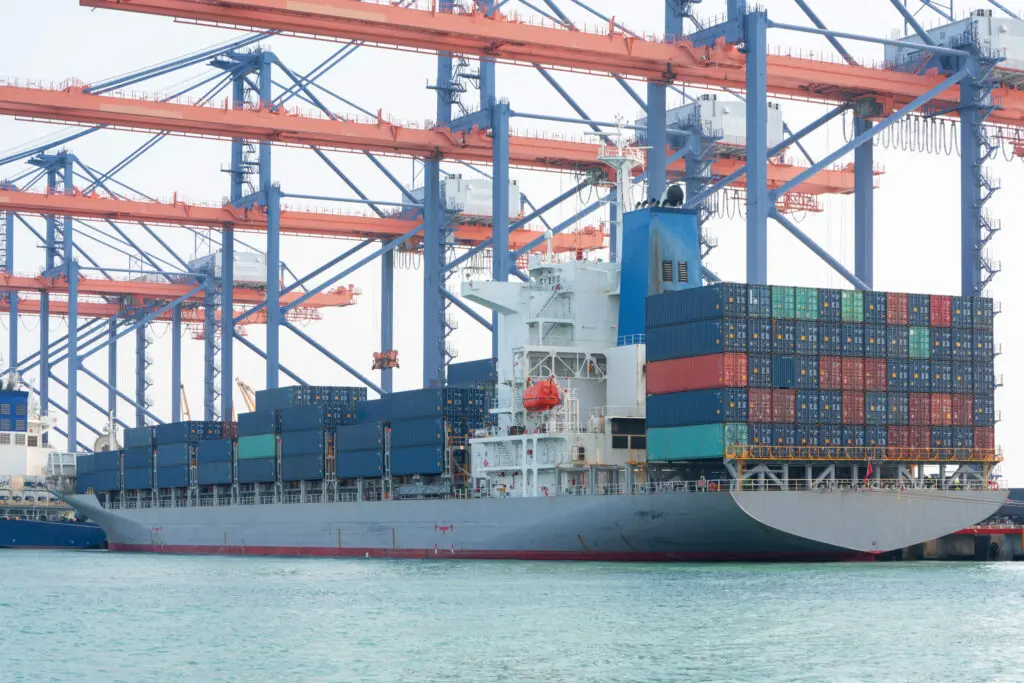
Steel and Aluminium at a Crossroads: Supply Chains, Tariff Wars, Business Impacts

  TLDR 2025 reshaped steel and aluminium supply chains. U.S. tariffs, EU uncertainty, and Chinese overcapacity have all driven structural rerouting, pricing instability, and compliance pressure. Businesses elevating metals sourcing to a strategic capability – with stronger origin assurance, supplier governance, and scenario planning – typically outperform competitors in terms of resilience, cost control, and market access. Firms will need to adapt to preserve their position and competitiveness. 2025 saw the sharpest escalation in metals-trade interventions since the original, President Trump-era Section 232 measures, in 2018. What began as a series of “targeted” moves early in 2025 has evolved into a multi-jurisdictional reset, touching tariffs, origin rules, industrial policy, and supply chain governance. For global businesses reliant on steel and aluminium, this will represent a fundamental shift in operations and market position. Steel and aluminium are systemic commodities. They underpin every major industrial value chain: automotive, aerospace, defence, energy infrastructure, construction, household appliances, and large consumer goods. When trade conditions tighten around these materials, the shockwaves propagate quickly: rising input costs, margin compression, delayed production cycles, and forced redesign of sourcing strategies. Several trigger events collided in 2025: In May 2025, the U.S. raised tariffs to 50% on a wide range of steel and aluminium categories, materially altering the economics of imports. By Q4, Washington introduced tightened melt-and-pour origin rules, significantly raising the bar for compliance and due diligence. Meanwhile, the EU remained locked in slow-moving negotiations with the U.S. on tariff-rate quotas, while simultaneously confronting the long-running challenge of Chinese overcapacity depressing European prices. China’s own pricing volatility (driven by subsidised overproduction and domestic demand swings) continue to distort global markets. Taken together, developments like these show that steel and aluminium supply chains are not experiencing a temporary disruption – they are undergoing a deeper, structural reorganisation. Businesses will need to adapt to preserve their position and competitiveness. Why this matters Global metals policy is moving faster than most supply chains can adjust. The 50% U.S. tariffs, melt-and-pour rules, EU safeguard activity, and China’s continued overproduction are reshaping sourcing and pricing across entire industries. For manufacturers and importers, this is not just a cost issue; it’s a governance, compliance, and competitiveness issue. How firms respond will determine whether they stay ahead of regulatory pressure, or become ensnared in a rapidly tightening enforcement environment. Expert guidance on international trade Contact clearBorder today →  How tariffs reshape global flows The 50% U.S. tariffs  Under the administration of President Trump, the U.S.’s move to increase tariffs to 50% on a wide range of steel and aluminium products marked a pivot in metals trade. The measures affect core inputs such as semi-finished steel, rolled products, extrusions, and several aluminium categories. Downstream products such as cars, domestic appliances, and industrial machinery are increasingly examined for the embedded origin of their metal content. The tariff shock has created three immediate consequences: Domestic inflation in U.S. metals markets. Manufacturers face significantly higher input costs, prompting either price rises or margin erosion. Redirected flows from Asia to Europe. Exporters seeking to avoid U.S. duties have diverted excess supply toward the EU, exacerbating oversupply conditions and placing further pressure on European producers. A new compliance burden for global exporters. The tightened melt-and-pour rules raise the risk of inadvertent non-compliance. Trans-shipment scrutiny has increased; origin validation is now a core operational requirement. EU’s dilemma The EU finds itself between a rock and a hard place. On one side are slow, uncertain EU–U.S. negotiations on tariff-rate quotas and metals cooperation frameworks; on the other is intensifying pressure from the steel lobby to protect European producers from diverted Asian supply after the U.S. tariff shock. European manufacturers face irregular and unpredictable input costs, complicating price setting, inventory planning, and long-term contracting. The EU’s Green Deal Industrial Plan adds further complexity, as imported metals are essential for its energy-transition ambitions, yet those same imports now threaten domestic competitiveness. The overcapacity question China’s long-standing overcapacity issue remains the gravitational centre of global metals instability. Production levels continue to exceed domestic demand, pushing subsidised excess onto global markets and driving renewed price volatility. This places other jurisdictions in a defensive posture. European and U.S. producers have reported intensified undercutting; Asian and Latin American manufacturers face narrowing margins; and developing economies risk deeper dependence on low-cost Chinese supply. Beijing may consider retaliatory measures, or deepen its alignment with Global South partners (such as Malaysia, Indonesia, Vietnam, and Thailand in Southeast Asia, or members of the Community of Latin American and Caribbean States) to mitigate against Western trade interventions. Either path would add new layers of complexity to an already fragmented global steel and aluminium market. Re-routing, re-pricing, re-risking How supply chains are responding The reshaping of steel and aluminium trade is visible in operational patterns, with supply chains reorganising at pace. Businesses are re-routing in order to defend margin and meet compliance thresholds. According to emerging reports, Asian-origin metals that previously flowed into the U.S. are being diverted toward Europe, Turkey, and the Middle East. European manufacturers, in turn, are exploring alternative inputs from India, Brazil, and the Gulf to avoid the tariff spillover effects. This repositioning may also trigger changes in logistics: greater use of east-west routes into the EU, potentially more inventory buffering, and in some sectors (such as automotive and machinery) a shift toward nearshoring for critical components. Cost structures are being re-priced globally. The U.S. tariff shock has lifted domestic prices sharply, while excess supply has depressed segments of the European market. Producers in China and Southeast Asia have adjusted export strategies in real time, offering deeper discounts to maintain throughput. For buyers, this creates a two-speed market: inflationary in the U.S., deflationary or erratic elsewhere. Long-term contracts are harder to negotiate, and index-linked pricing is seeing a resurgence. Perhaps most importantly, supply chains are being re-risked. Compliance is now inseparable from commercial decision-making – a cheap tonne of steel that ultimately fails melt-and-pour verification is a liability, not a saving. Manufacturers are mapping exposure at a deeper level than before, tracing inputs back to smelters (not mills), and stress-testing for tariff escalation or port inspections. Insurance markets are responding too, with new language around origin risk and misdeclaration liability appearing in trade credit and marine cargo policies. Rising compliance complexity The enforcement of the U.S. melt-and-pour rule is proving to be one of the most consequential compliance developments. By requiring origin to be established at the smelting stage – not the final manufacturing stage – regulators have effectively redrawn the documentation burden for the entire value chain. Finished goods manufacturers, especially in automotive, appliances, construction products, and machinery, must now evidence multi-layered provenance to avoid penalties or shipment holds. This comes alongside broader tightening: The EU is advancing anti-circumvention probes and designing new safeguard mechanisms around diverted Asian supply Tariff-rate quota negotiations with the U.S. remain uncertain, complicating long-term planning The UK faces a hybrid challenge: exporters into the U.S. or EU must meet foreign origin standards and navigate domestic decarbonisation requirements shaping the future of UK steelmaking For business boardrooms, this translates into elevated expectations around: Proving origin at smelter level Supplier vetting across multiple jurisdictions End-to-end documentation capable of withstanding audits Horizon scanning for tariff escalation and market fragmentation Avoiding unintentional trans-shipment exposure, especially in multi-country routing models Implications for business Cost structures will remain unstable for the near term. U.S. tariffs have created inflationary pressure domestically; Europe is facing oversupply; and Chinese volatility continues to inject uncertainty into global reference prices. Businesses should anticipate continued dual-market dynamics throughout 2026. Compliance risk has moved from operational to existential. The melt-and-pour rule, EU safeguard mechanisms, and intensified anti-circumvention enforcement mean that the regulatory exposure of a single misclassified input far exceeds the cost of the input itself. Boardrooms increasingly view origin assurance as part of corporate governance, not logistics. Supply chain strategy is entering a redesign phase. Nearshoring and multi-regional sourcing are gaining momentum Dual or triple sourcing for steel and aluminium is becoming standard in automotive, engineering, and construction Inventory models are shifting from just-in-time to strategic buffering Quality and compliance maturity are becoming as important as price when selecting a supplier Commercial positioning is changing, too. Companies that can evidence clean origin, stable sourcing, and strong governance are positioned to outperform competitors in tenders – particularly with OEMs (original equipment manufacturers) facing strict regulatory exposure of their own. For some sectors, metals compliance is now a competitive differentiator. The last word Steel and aluminium have always been essential industrial inputs, but in the current climate, they’ve become a barometer of global economic and geopolitical tension. Tariffs, origin rules, and enforcement actions are all actively reshaping supply chains, capital allocation, and competitiveness. The businesses equipped to succeed in this environment treat metals not simply as commodities to be purchased, but as strategic exposures to be governed. This means that decision-makers have visibility deeper than tier-one suppliers; they can evidence origin at smelt stage. They plan for tariff escalation; not react to it. And they embed compliance into commercial decision-making. Early, proactive movement will help protect against price shocks, audit interventions, and market-access constraints, as the next phase of trade policy unfolds. For manufacturers, importers, and exporters, the question is not whether to adapt, but how quickly. The former era of (relatively) stable and predictable metals flows is over – strategic readiness is now the defining commercial advantage. For trade advisory tailored to your business and its operations Contact the clearBorderteam today → 

Steel and Aluminium at a Crossroads: Supply Chains, Tariff Wars, Business Impacts
Strategy & Horizon Scannning

Introducing our new podcast series ‘Borders for the Boardroom’

“Borders for the Boardroom” is a podcast series brought to you by the team at clearBorder. In these short episodes, we introduce you to all things trade and borders providing an insight and understanding that you may not have had before. We hope that this means when you return to your business you have a greater knowledge of the impact and challenges borders and trade will have on your organisation, as well as the opportunities available to perhaps do things differently, reduce risk and continue to grow. Each podcast introduces a new topic, led by one of the clearBorder team of experts. We hope you enjoy it. If you want to continue the conversation or have any questions then do get in touch with us at info@clearborder.co.uk. We’ll see you next time. Produced and edited by Yada Yada. Listen here: Spotify  |  Apple

Introducing our new podcast series ‘Borders for the Boardroom’
Strategy & Horizon Scannning

A fragile reset? What the US–China tariff truce means for cross-border trade strategies in 2026

In late October 2025, a diplomatic thaw between Washington and Beijing produced a narrowly scoped trade “pause” – a tactical (and temporary) easing of the headline tensions which have dominated the trade-sphere in recent months.  The agreement trimmed select U.S. tariff categories (for example, halving certain fentanyl-related duties), and opened the door to resumed Chinese purchases of U.S. soybeans; while Beijing signalled a conditional scaling back of some export controls on rare earth elements.  For boardrooms, this pause buys time for resilience-building; what it does not do is remove structural levers that can reignite escalation. China retains decisive market power over rare earths and refining capacity, and Beijing’s export restrictions – introduced and then expanded in October 2025 – remain a latent threat to industries from EV batteries to defence suppliers. Financial and commodity markets treated the announcement as tentative: rare-earth prices and equities briefly eased, but analysts warned supplies and stocks could re-tighten if the geopolitical headwinds shifted.  Meanwhile, political and legal fault-lines persist in Washington. The administration’s tariff authority under the International Emergency Economic Powers Act (IEEPA) is the subject of active judicial scrutiny at the U.S. Supreme Court; justices heard oral arguments on 5 November 2025 and raised serious questions about executive reach. A negative ruling could remove a major instrument of U.S. trade policy – or force the administration to pivot to other statutory levers. That legal uncertainty compounds the truce’s fragility.    Why this matters The US–China tariff truce offers a temporary pause, not lasting certainty. For boardrooms and global supply chain teams, understanding the risks, monitoring key signals, and proactively planning for multiple outcomes is critical to maintaining stability, protecting margins, and mitigating the operational and strategic impacts of potential renewed escalation.   More on the U.S., China, South Korea, and what trade talks mean for you: → Borders for the Boardroom: Sean Miner on the US-China trade deal Listen now on Spotify and Apple Music What changed in October 2025… and what didn’t What changed Targeted tariff adjustments and commitments. In the late-October negotiations, U.S. officials said certain tariff lines tied to fentanyl precursor chemicals would be halved – from 20% to 10% – lowering the headline U.S. tariff burden on Chinese imports by a reported few percentage points overall. The talks also included commitments for a sizeable uptick in Chinese purchases of U.S. soybeans (Treasury officials cited a figure in the region of 12 million metric tonnes for the season). It’s likely these moves were partially influenced by the U.S. administration’s desire to appease what it sees as a core voter base of workers and farmers. A temporary easing of export control pressure. Beijing signalled it would pause, or at least temper, certain enforcement actions tied to rare-earth export controls, helping to calm thin but critical supply lines for some manufacturers. Markets interpreted the message as conditional rather than permanent, and subsequent industry commentary urged caution.  Regional tariff alignment moves. The U.S. also reached or reaffirmed tariff understandings with regional partners (notably arrangements that set some levies for Japan and South Korea at lower bands), reshaping near-term trade exposure for particular sectors such as autos and shipbuilding. Those regional moves probably form part of a broader attempt to compartmentalise tensions and avoid a wider regional fallout.  What didn’t change The strategic rivalry remains. The truce is tactical. China’s longer-term industrial strategy – including control over mining, processing and refining of many rare earths – has not been reversed. Beijing’s October 2025 expansion of export controls (adding multiple elements and equipment to control lists) shows the country still possesses structural levers that could be re-deployed if negotiations sour.  Legal and policy uncertainty in Washington. The Supreme Court review of IEEPA-based tariff authority introduces a material policy risk. If the Court constrains presidential power to impose broad tariffs, the administration may have to pivot to other mechanisms (e.g., Section 232, Trade Act tools) with different political, legal and operational implications. In short; the legal basis that enabled the rapid imposition of duties early in 2025 is not guaranteed to persist.  Domestic market realities limit quick wins. Beijing’s promise to increase U.S. soybean purchases was electorally useful for the U.S. administration, perhaps, but agricultural market signals suggest China’s immediate buying capacity may be limited by inventory and crush-margin dynamics. Reuters reports flag a soybean stock overhang that may constrain near-term purchases.  The net effect At least in the immediate future, the October ‘tariff truce’ reduces the near-term political temperature: selected tariff lines were eased, some procurement resumed, and short-term market volatility abated.  But – the structural levers that create systemic risk (rare-earth dominance, legal uncertainty over tariff authority, and the political incentives that drive tit-for-tat measures) remain very much alive.  For business leaders, the best operational position is not one of détente, but of time-boxed respite. That means acting quickly to shore up optionality, and avoid being caught in a reactive posture when the pause ends.  H2: Why the truce Is fundamentally unstable The agreement was engineered as a tactical and temporary de-escalation, not as a lasting settlement. While headline tariff lines were softened, the levers of critical economic power remain deeply asymmetrical. First, China’s rare-earth export controls remain a potent strategic weapon. Despite signaling an easing of enforcement, Beijing retains control over key mining and refining capacity. Prior expansions of export restrictions demonstrate that it is fully capable of re-tightening. Second, President Trump’s tariff authority under IEEPA is in question. The U.S. Supreme Court’s current review directly challenges the administration’s legal basis to impose broad trade duties.  Third, domestic and political incentives complicate sustained cooperation. Beijing is under pressure to protect strategic industries; Washington faces conflicting demands from agriculture, manufacturing, tech, and national security voices.  Finally, the temporary nature of the pause itself speaks volumes. This is not a comprehensive reset but a time-bound, finite window, subject to the ebb and flow of geopolitical risk.  Implications for global business and supply chains This tactical pause in trade hostilities brings into focus certain risks for multinational companies operating across complex supply chains. Borders for the Boardroom: Christopher Salmon on supply chain resilience → Listen now on Spotify and Apple Music Import exposure and tariff risk Existing duties remain in place, and the legal jeopardy stemming from IEEPA challenges means the entire tariff infrastructure could change. For supply chain teams, this is the moment to re-assess import exposure: which products are most vulnerable, and what alternative sources exist if the truce unravels. Supply chain architecture and sourcing The pause presents a moment for strategic recalibration. Firms that once relied on ‘China +1’ sourcing strategies should re-evaluate: ‘China +N’ is the more resilient, risk-mitigated position. Near-shoring, alternate production hubs, and regional diversification offer possible solutions, but such shifts can be costly and time-consuming. Contracting, procurement, and pricing governance With uncertainty lessening in the short term, companies may be tempted to renegotiate contracts or lock-in suppliers aggressively. However, such moves should be structured carefully. Procurement teams should build scenario clauses into agreements, allow for tariff escalation or rollback triggers, and articulate pass-through mechanisms.  Capital deployment and investment strategy For capital-intensive operators (especially in autos, semiconductors, and clean tech) the pause is a window of opportunity to recommit capital, under conditional terms.  However, investment without horizon scanning is a high-stakes guessing game. Boardrooms must ringfence capital and create “if-then” gateways triggered directly by treaty developments and legal outcomes. Navigating the tariff pause: signals, strategy, and stability Timely, although seemingly never built to last, the US–China tariff truce represents a holding pattern amid unresolved geopolitical, legal, and economic pressures. For boardrooms, CFOs, and global supply chain leads, vigilance here is critical. The coming 6–9 months will reveal whether the pause becomes a platform for stability, or a prelude to renewed escalation. Key signals to monitor: Supreme Court IEEPA ruling: a decision limiting or upholding presidential tariff authority will immediately reshape strategic options. China’s compliance: soybean purchases, REE export controls, and shifts in blacklists or procurement rules will test the truce’s integrity. U.S. domestic pressures: farmers, retailers, tech, and security interests may prompt rapid shifts in U.S. tariff policy. South Korea and Japan: developments in semiconductor deals, export controls, and bilateral concessions could influence Beijing’s response. China’s geoeconomic posture: incremental moves in investment screening or sector targeting may accumulate into material operational risk. What cross-border companies should do: Refresh scenario models with tariff, legal, and geopolitical triggers Audit supplier and import exposure under multiple outcomes Advance diversification and dual-sourcing strategies Strengthen contractual protections for tariffs and disruptions Monitor policy daily, not quarterly Preparation builds stability Geopolitical uncertainty cannot be entirely eliminated; but it can be priced, planned for, and strategically contained. The U.S.–China relationship is unlikely to revert to pre-2018 norms: structural forces – technological leadership, critical minerals, industrial security – render volatility a recurring reality for multinational organisations. Boardrooms focused on embedding resilience into governance, procurement, investment, and supply chain design will be significantly better-equipped to face future scenarios and weather their impacts.   → Borders for the Boardroom: Christopher Salmon on supply chain resilience Listen now on Spotify and Apple Music

A fragile reset? What the US–China tariff truce means for cross-border trade strategies in 2026
Secret Link