Christopher Salmon

Chief Executive

Acronym Full Name Meaning
AC Authorised Consignor/ee A person who has been authorised to carry out transit operations without presenting the goods and the transit declaration at the customs office of departure. The application for authorised consignor can be filed electronically using the Customs Decision System (CDS).
AEO Authorised Economic Operator Authorised Economic Operator status is an internationally recognised quality mark that shows your business’s role in the international supply chain is secure and has customs control procedures that meet Authorised Economic Operator standards and criteria.
APHA Animal and Plant Health Agency The UK Government Agency which carries out animal and plant health controls required by legislation
BCC British Chambers of Commerce The British Chambers of Commerce represent local business communities in every part of the UK, helping businesses of every size and sector to promote trade.
BCP Border Control Point The physical entity and associated people and systems at which controls and checks imposed on goods entering the EU or the UK are exercised.
BF Border Force Border Force is a law-enforcement command within the Home Office, responsible for frontline border control operations at air, sea and rail ports in the United Kingdom
BIFA British International Freight Association The British International Freight Association, also known as BIFA, is the prime United Kingdom trade association representing UK freight forwarders. These are companies that forward goods internationally on behalf of importers and exporters.
SI Brexit SI Brexit “SI Brexit” IT system is the French customs system that receives customs notifications enabling French authorities to instruct the driver of each vehicle to go to either the green or the orange lane after disembarking in the French port of arrival.
C 88 Single Administrative Document Form C88 is a customs import or export declaration form.
Catch Certificate Catch Certificate A catch certificate is required to guarantee the legal origin of fisheries products entering the EU Sanitary and Phytosanitary (SPS) regulatory zone from third countries, including GB. A catch certificate provides information which proves that the fishery product(s) have been caught under a legal fishing regime.
CCG Customs Comprehensive Guarantee Use a customs comprehensive guarantee to cover Customs Duty, excise duty and import VAT when you regularly import goods or use common and Union transit.
CDS Customs Declaration Service CDS is the successor system to CHIEF. Currently in use for trade to and from Northern Ireland, it receives and stores customs declarations.
CHED Common Health Entry Document The EU or UK document which when completed by the import authorities demonstrates that a consignment has cleared SPS checks
CHIEF Customs Handling of Import and Export Freight Customs Handling of Import & Export Freight (CHIEF) is the computer system of the United Kingdom’s revenue and customs services, HMRC, used for managing the declaration and movement of goods into and out of the United Kingdom and allowing UK traders to communicate with counterpart customs systems in the other member states of the European Union. It has been partly replaced by the Customs Declaration Service (CDS). CHIEF is due to be retired during 2022.
CMR Convention on the Contract for the International Carriage of Goods by Road/Consignment note A document used for the regulation of road freight transport, and serves as an international agreement. The document has been adopted by most of the European states with the purpose to regulate legal issues concerning road freight transportation.
CSP Community System Provider Independent trade systems that directly serve carriers, transit sheds and freight forwarders. CSPs record and track the movement of goods within ports and airports, enabling them to operate more efficiently.
CTC Common Transit Convention The Common Transit Convention is used to ease the movement of goods between or through any common transit countries. The UK is a member of the Common Transit Convention.
DAP Delivered-at-Place Delivered-at-place (DAP) is an international trade term used to describe a deal in which a seller agrees to pay all costs and suffer any potential losses of moving goods sold to a specific location. In delivered-at-place agreements, the buyer is responsible for paying import duties and any applicable taxes, including clearance and local taxes, once the shipment has arrived at the specified destination.
DDA Duty Deferment Account A duty deferment account lets you make one customs duty payment a month through Direct Debit instead of paying for individual consignments. You can apply for a duty deferment account if you’re an importer, someone who represents importers or you’re releasing goods from an excise warehouse.
DDP Delivered Duty Paid Delivered duty paid (DDP) is a delivery agreement whereby the seller assumes all of the responsibility, risk, and costs associated with transporting goods until the buyer receives or transfers them at the destination port. This agreement includes paying for shipping costs, export and import duties, insurance, and any other expenses incurred during shipping to an agreed-upon location in the buyer’s country.
DEFRA Department for Environment, Food and Rural Affairs The Government Department responsible for the import and export regimes that protect human and plant health
DELTA T DELTA T DELTA-T is the new (2021) French computer system for managing declarations under the Common Transit Convention. These transit declarations allow the movement of goods with suspension of customs duties and taxes. They are valid in EU countries as well as in countries that have signed the Transit Convention.
DIT Department for International Trade The Department for International Trade is a United Kingdom government department responsible for striking and extending trade agreements between the United Kingdom and foreign countries, as well as for encouraging foreign investment and export trade.
E-DOMERO E-DOMERO The legacy government IT portal for making on-line applications for Phytosanitary certificates
EHCO Export Health Certificates Online The UK government’s IT system for producing EHCs
EHC Export Health Certificate A certificate, usually signed by a vet, attesting that an export consignment meets the requirements of that certificate
EHO Environmental Health Officer Environmental Health Officers (also known as Public Health Inspectors or Environmental Health Practitioners) are responsible for carrying out measures for protecting public health, including administering and enforcing legislation related to environmental health and providing support to minimize health and safety hazards.
ENS Entry Summary Declaration Also known as a ‘Safety and Security Declaration’. An ENS is a declaration provided by the shipper or the importer to the UK customs, providing information on the cargo, EORI numbers of the shipper & the consignee, items commodity code, number of packages, container number, seal number, gross weight of the goods, and incoterms, are some general information required for the ENS declaration.
EORI Economic Operators Registration and Identification A European Union registration and identification number for businesses which undertake the import or export of goods into or out of the EU.
EXW Ex Works An international trade term that describes when a seller makes a product available at a designated location, and the buyer of the product must cover the transport costs.
FCA Free Carrier The free carrier is a trade term dictating that a seller of goods is responsible for the delivery of those goods to a destination specified by the buyer. When used in trade, the word “free” means the seller has an obligation to deliver goods to a named place for transfer to a carrier. The destination is typically an airport, shipping terminal, warehouse, or other location where the carrier operates. It might even be the seller’s business location.
Free Circulation Free Circulation Free Circulation means that the goods are cleared by Customs and you can sell them to, or use them in countries in the European Union.
FSA Food Standards Agency The Government non Ministerial Department that is responsible for food standards and safety including that relating to imports.
FTA Free Trade Agreement A free trade agreement (FTA) or treaty is an agreement according to international law to form a free-trade area between the cooperating states.
GATT General Agreement on Tariffs and Trade The General Agreement on Tariffs and Trade is a legal agreement between many countries, whose overall purpose was to promote international trade by reducing or eliminating trade barriers such as tariffs or quotas.
GetLink Eurotunnel operator Getlink, formerly Groupe Eurotunnel, is a European public company based in Paris, that manages and operates the infrastructure of the Channel Tunnel between England and France, operates the Eurotunnel Shuttle train service, and earns revenue on other trains that operate through the tunnel.
GVMS Goods Vehicle Movement Service The goods vehicle movement service (GVMS) is a UK Government IT platform for moving goods into or out of Northern Ireland and Great Britain (England, Scotland and Wales).
Harbour Authority Harbour Authority A harbour authority is an independent self-governing body that is responsible for safely managing and efficiently running a harbour.
HMG Her Majesty’s Government The UK government.
HMRC Her Majesty’s Revenue and Customs A non-ministerial department of the UK Government responsible for the collection of taxes, the payment of some forms of state support, the administration of other regulatory regimes including customs and excise.
HRFNAO High Risk Food Not of Animal Origin The name given in EU and UK law to plants that are subject to import controls and checks to protect public health.
ICC International Chambers of Commerce The International Chamber of Commerce is the largest, business organization in the world. Its over 45 million members in over 100 countries have interests spanning every sector of private enterprise.
Incoterms® International Commercial Terms The Incoterms or International Commercial Terms are a series of pre-defined commercial terms published by the International Chamber of Commerce relating to international commercial law. Incoterms is a registered trade mark of the ICC
IPAFFS Import of Products, Animals, Food and Feed System The UK Government IT system that manages SPS checks and paperwork relating to the import of Animal Products, HRFNAO, Animals, Food and Feed
IPR Inward Processing Relief Inward Processing (previously known as Inward Processing Relief or IPR) allows for the relief from customs duty and import VAT on the importation of non-EU goods that are processed and then exported outside the EU.
LRN Local Reference Number If you need a transit declaration you will need to produce a LRN in order to complete the document. Each consignment will need its own unique local reference number, which cannot be duplicated onto another consignment.
MRN Movement Reference Number The MRN is a customs identification number that’s created each time a declaration is submitted for importing or exporting goods. The number generated is bespoke, allowing your goods to be uniquely linked to you.
NCTS New Computerised Transit System The New Computerised Transit System (NCTS) is a system of electronic declaration and processing that traders must use to submit Common Transit declarations. You can also use NCTS to submit Transports Internationaux Routiers (TIR) declarations electronically if you’re in Northern Ireland.
OoD Office of Destination/Departure Office of destination means any customs office at which a customs transit operation is terminated. Office of departure means the customs office where customs declarations placing goods under a transit procedure are accepted. Offices of destination/departure can be traders’ premises, if they are approved Authorised Consignor/ees under the Common Transit Convention.
OoT Office of Transit Transit Office means the Customs offices (other than those of departure and destination) through which vehicles pass during their Inter-State journey
OPR Outward Processing Relief OPR allows EU traders to temporarily export goods from the EU for processing or repair in a third (non- EU ) country and then claim full or partial duty relief when the goods are re-imported.
OV Official Veterinarian The name given in the UK to a private sector veterinary surgeon who is authorised to undertake certain activities relating to animal and public health on behalf of the government
PEACH Procedure for Electronic Application for Certificates from the Horticultural Marketing Inspectorate The government IT system responsible for issuing certain certificates relating to Plant Health and plant marketing standards. Due to be replaced by IPAFFS.
PHA Port Health Authority PHAs carry out a range of health controls at the UK borders. These include checks on imported food, inspecting ships and aircraft for food safety and infectious disease control, as well as general public and environmental health checks. Port health controls are managed by local authorities who enforce regulations on behalf of central government.
Plant Inspector Plant Inspector A trained inspector of plants working for APHA and able to issue Phytosanitary certificates for exports and check and clear imports of plants
POAO Products of Animal Origin Products derived from animals and destined for human consumption
Private Attestation Private Attestation A document provided by the importer of food or animal products in place of an Export Health Certificate. Private attestations apply to food/animal products which are not considered to require a full EHC signed by an Official Veterinarian.
RGR Return Goods Relief Subject to specific conditions, Returned Goods Relief (RGR) removes or reduces the repayment of import duties for goods that are re-imported into the same customs territory that they have already been exported from.
RoO Rules of Origin Rules of origin are the rules to attribute a country of origin to a product in order to determine its “economic nationality”.
S&S Safety and Security Declarations (also ENS) Also known as a ‘Entry Summary Declaration’. An S&S is a declaration provided by the shipper or the importer to the UK customs, providing information on the cargo, EORI numbers of the shipper & the consignee, items commodity code, number of packages, container number, seal number, gross weight of the goods, and incoterms, are some general information required for the S&S declaration.
SPS Sanitary and Phytosanitary Sanitary and Phytosanitary measures are the rules that govern trade in animals and plants and their products
T1 Transit document A T1 is a transit document used to transport goods from the customs office at the place of departure to the customs office at the destination without paying customs duties and taxes within the territories of the countries included in the transit agreement.
T2 Transit document An internal transit (T2) usually applies to goods that come from inside of the EU. When goods are moved under a T2, you can temporarily move those goods out of the EU, and move them back in again, without having to customs clear them again.
TRACES Trade Control and Expert System The EU IT system that manages imports of animals and plants and their products into the EU
TSS Trader Support Service If you move goods in or out of Northern Ireland the Trader Support Service will guide you through any changes due to the implementation of the Northern Ireland Protocol.
WCO World Customs Organisation The World Customs Organization is an intergovernmental organization headquartered in Brussels, Belgium.
WTO World Trade Organisation The World Trade Organization is an intergovernmental organization that regulates and facilitates international trade between nations. Governments use the organization to establish, revise, and enforce the rules that govern international trade.
AIS Automated Import System Republic of Ireland’s customs system
RHA Road Haulage Assocation The Road Haulage Association Ltd is a private company limited by guarantee dedicated to the interests of the road haulage industry. It is the only trade association in the United Kingdom dedicated solely to road haulage.
LogisticsUK Logistics UK Logistics UK, formerly the Freight Transport Association is one of the largest trade associations in the UK, with members moving goods by road, rail, sea, and air.
HTA Horticultural Trades Assocation The Horticultural Trades Association (HTA) is the trade association for the UK garden industry.
Douane French Customs Agency French customs agency, responsible for collecting tariffs and for controlling the flow of goods into and out of a country.

Other interesting reads

Strategy & Horizon Scannning

Steel and Aluminium at a Crossroads: Supply Chains, Tariff Wars, Business Impacts

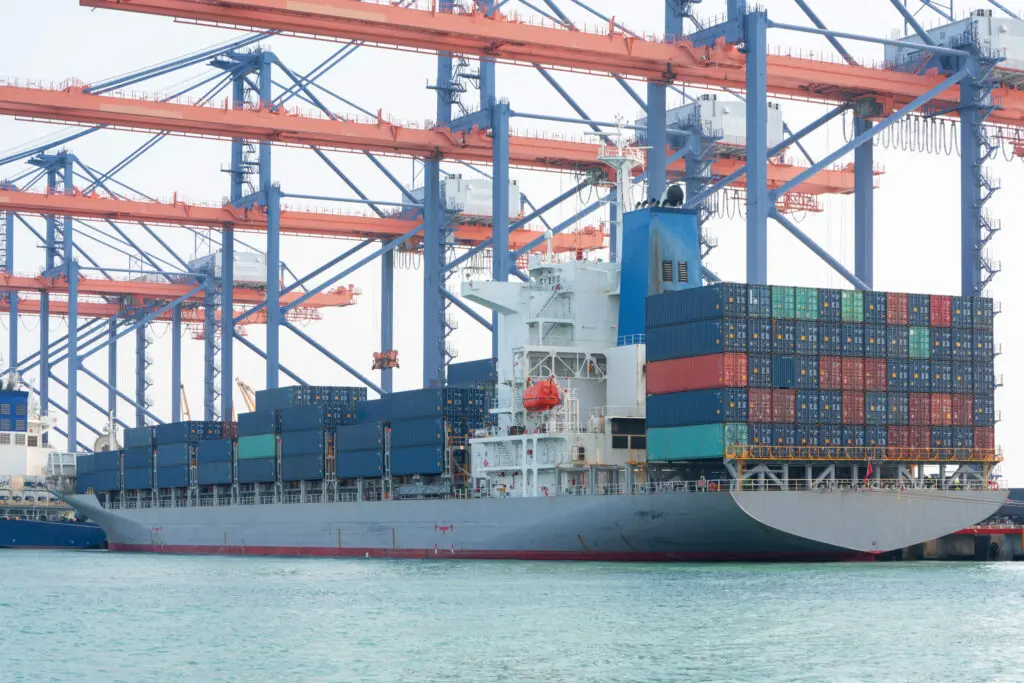
  TLDR 2025 reshaped steel and aluminium supply chains. U.S. tariffs, EU uncertainty, and Chinese overcapacity have all driven structural rerouting, pricing instability, and compliance pressure. Businesses elevating metals sourcing to a strategic capability – with stronger origin assurance, supplier governance, and scenario planning – typically outperform competitors in terms of resilience, cost control, and market access. Firms will need to adapt to preserve their position and competitiveness. 2025 saw the sharpest escalation in metals-trade interventions since the original, President Trump-era Section 232 measures, in 2018. What began as a series of “targeted” moves early in 2025 has evolved into a multi-jurisdictional reset, touching tariffs, origin rules, industrial policy, and supply chain governance. For global businesses reliant on steel and aluminium, this will represent a fundamental shift in operations and market position. Steel and aluminium are systemic commodities. They underpin every major industrial value chain: automotive, aerospace, defence, energy infrastructure, construction, household appliances, and large consumer goods. When trade conditions tighten around these materials, the shockwaves propagate quickly: rising input costs, margin compression, delayed production cycles, and forced redesign of sourcing strategies. Several trigger events collided in 2025: In May 2025, the U.S. raised tariffs to 50% on a wide range of steel and aluminium categories, materially altering the economics of imports. By Q4, Washington introduced tightened melt-and-pour origin rules, significantly raising the bar for compliance and due diligence. Meanwhile, the EU remained locked in slow-moving negotiations with the U.S. on tariff-rate quotas, while simultaneously confronting the long-running challenge of Chinese overcapacity depressing European prices. China’s own pricing volatility (driven by subsidised overproduction and domestic demand swings) continue to distort global markets. Taken together, developments like these show that steel and aluminium supply chains are not experiencing a temporary disruption – they are undergoing a deeper, structural reorganisation. Businesses will need to adapt to preserve their position and competitiveness. Why this matters Global metals policy is moving faster than most supply chains can adjust. The 50% U.S. tariffs, melt-and-pour rules, EU safeguard activity, and China’s continued overproduction are reshaping sourcing and pricing across entire industries. For manufacturers and importers, this is not just a cost issue; it’s a governance, compliance, and competitiveness issue. How firms respond will determine whether they stay ahead of regulatory pressure, or become ensnared in a rapidly tightening enforcement environment. Expert guidance on international trade Contact clearBorder today →  How tariffs reshape global flows The 50% U.S. tariffs  Under the administration of President Trump, the U.S.’s move to increase tariffs to 50% on a wide range of steel and aluminium products marked a pivot in metals trade. The measures affect core inputs such as semi-finished steel, rolled products, extrusions, and several aluminium categories. Downstream products such as cars, domestic appliances, and industrial machinery are increasingly examined for the embedded origin of their metal content. The tariff shock has created three immediate consequences: Domestic inflation in U.S. metals markets. Manufacturers face significantly higher input costs, prompting either price rises or margin erosion. Redirected flows from Asia to Europe. Exporters seeking to avoid U.S. duties have diverted excess supply toward the EU, exacerbating oversupply conditions and placing further pressure on European producers. A new compliance burden for global exporters. The tightened melt-and-pour rules raise the risk of inadvertent non-compliance. Trans-shipment scrutiny has increased; origin validation is now a core operational requirement. EU’s dilemma The EU finds itself between a rock and a hard place. On one side are slow, uncertain EU–U.S. negotiations on tariff-rate quotas and metals cooperation frameworks; on the other is intensifying pressure from the steel lobby to protect European producers from diverted Asian supply after the U.S. tariff shock. European manufacturers face irregular and unpredictable input costs, complicating price setting, inventory planning, and long-term contracting. The EU’s Green Deal Industrial Plan adds further complexity, as imported metals are essential for its energy-transition ambitions, yet those same imports now threaten domestic competitiveness. The overcapacity question China’s long-standing overcapacity issue remains the gravitational centre of global metals instability. Production levels continue to exceed domestic demand, pushing subsidised excess onto global markets and driving renewed price volatility. This places other jurisdictions in a defensive posture. European and U.S. producers have reported intensified undercutting; Asian and Latin American manufacturers face narrowing margins; and developing economies risk deeper dependence on low-cost Chinese supply. Beijing may consider retaliatory measures, or deepen its alignment with Global South partners (such as Malaysia, Indonesia, Vietnam, and Thailand in Southeast Asia, or members of the Community of Latin American and Caribbean States) to mitigate against Western trade interventions. Either path would add new layers of complexity to an already fragmented global steel and aluminium market. Re-routing, re-pricing, re-risking How supply chains are responding The reshaping of steel and aluminium trade is visible in operational patterns, with supply chains reorganising at pace. Businesses are re-routing in order to defend margin and meet compliance thresholds. According to emerging reports, Asian-origin metals that previously flowed into the U.S. are being diverted toward Europe, Turkey, and the Middle East. European manufacturers, in turn, are exploring alternative inputs from India, Brazil, and the Gulf to avoid the tariff spillover effects. This repositioning may also trigger changes in logistics: greater use of east-west routes into the EU, potentially more inventory buffering, and in some sectors (such as automotive and machinery) a shift toward nearshoring for critical components. Cost structures are being re-priced globally. The U.S. tariff shock has lifted domestic prices sharply, while excess supply has depressed segments of the European market. Producers in China and Southeast Asia have adjusted export strategies in real time, offering deeper discounts to maintain throughput. For buyers, this creates a two-speed market: inflationary in the U.S., deflationary or erratic elsewhere. Long-term contracts are harder to negotiate, and index-linked pricing is seeing a resurgence. Perhaps most importantly, supply chains are being re-risked. Compliance is now inseparable from commercial decision-making – a cheap tonne of steel that ultimately fails melt-and-pour verification is a liability, not a saving. Manufacturers are mapping exposure at a deeper level than before, tracing inputs back to smelters (not mills), and stress-testing for tariff escalation or port inspections. Insurance markets are responding too, with new language around origin risk and misdeclaration liability appearing in trade credit and marine cargo policies. Rising compliance complexity The enforcement of the U.S. melt-and-pour rule is proving to be one of the most consequential compliance developments. By requiring origin to be established at the smelting stage – not the final manufacturing stage – regulators have effectively redrawn the documentation burden for the entire value chain. Finished goods manufacturers, especially in automotive, appliances, construction products, and machinery, must now evidence multi-layered provenance to avoid penalties or shipment holds. This comes alongside broader tightening: The EU is advancing anti-circumvention probes and designing new safeguard mechanisms around diverted Asian supply Tariff-rate quota negotiations with the U.S. remain uncertain, complicating long-term planning The UK faces a hybrid challenge: exporters into the U.S. or EU must meet foreign origin standards and navigate domestic decarbonisation requirements shaping the future of UK steelmaking For business boardrooms, this translates into elevated expectations around: Proving origin at smelter level Supplier vetting across multiple jurisdictions End-to-end documentation capable of withstanding audits Horizon scanning for tariff escalation and market fragmentation Avoiding unintentional trans-shipment exposure, especially in multi-country routing models Implications for business Cost structures will remain unstable for the near term. U.S. tariffs have created inflationary pressure domestically; Europe is facing oversupply; and Chinese volatility continues to inject uncertainty into global reference prices. Businesses should anticipate continued dual-market dynamics throughout 2026. Compliance risk has moved from operational to existential. The melt-and-pour rule, EU safeguard mechanisms, and intensified anti-circumvention enforcement mean that the regulatory exposure of a single misclassified input far exceeds the cost of the input itself. Boardrooms increasingly view origin assurance as part of corporate governance, not logistics. Supply chain strategy is entering a redesign phase. Nearshoring and multi-regional sourcing are gaining momentum Dual or triple sourcing for steel and aluminium is becoming standard in automotive, engineering, and construction Inventory models are shifting from just-in-time to strategic buffering Quality and compliance maturity are becoming as important as price when selecting a supplier Commercial positioning is changing, too. Companies that can evidence clean origin, stable sourcing, and strong governance are positioned to outperform competitors in tenders – particularly with OEMs (original equipment manufacturers) facing strict regulatory exposure of their own. For some sectors, metals compliance is now a competitive differentiator. The last word Steel and aluminium have always been essential industrial inputs, but in the current climate, they’ve become a barometer of global economic and geopolitical tension. Tariffs, origin rules, and enforcement actions are all actively reshaping supply chains, capital allocation, and competitiveness. The businesses equipped to succeed in this environment treat metals not simply as commodities to be purchased, but as strategic exposures to be governed. This means that decision-makers have visibility deeper than tier-one suppliers; they can evidence origin at smelt stage. They plan for tariff escalation; not react to it. And they embed compliance into commercial decision-making. Early, proactive movement will help protect against price shocks, audit interventions, and market-access constraints, as the next phase of trade policy unfolds. For manufacturers, importers, and exporters, the question is not whether to adapt, but how quickly. The former era of (relatively) stable and predictable metals flows is over – strategic readiness is now the defining commercial advantage. For trade advisory tailored to your business and its operations Contact the clearBorderteam today → 

Steel and Aluminium at a Crossroads: Supply Chains, Tariff Wars, Business Impacts
Strategy & Horizon Scannning

Introducing our new podcast series ‘Borders for the Boardroom’

“Borders for the Boardroom” is a podcast series brought to you by the team at clearBorder. In these short episodes, we introduce you to all things trade and borders providing an insight and understanding that you may not have had before. We hope that this means when you return to your business you have a greater knowledge of the impact and challenges borders and trade will have on your organisation, as well as the opportunities available to perhaps do things differently, reduce risk and continue to grow. Each podcast introduces a new topic, led by one of the clearBorder team of experts. We hope you enjoy it. If you want to continue the conversation or have any questions then do get in touch with us at info@clearborder.co.uk. We’ll see you next time. Produced and edited by Yada Yada. Listen here: Spotify  |  Apple

Introducing our new podcast series ‘Borders for the Boardroom’
Strategy & Horizon Scannning

A fragile reset? What the US–China tariff truce means for cross-border trade strategies in 2026

In late October 2025, a diplomatic thaw between Washington and Beijing produced a narrowly scoped trade “pause” – a tactical (and temporary) easing of the headline tensions which have dominated the trade-sphere in recent months.  The agreement trimmed select U.S. tariff categories (for example, halving certain fentanyl-related duties), and opened the door to resumed Chinese purchases of U.S. soybeans; while Beijing signalled a conditional scaling back of some export controls on rare earth elements.  For boardrooms, this pause buys time for resilience-building; what it does not do is remove structural levers that can reignite escalation. China retains decisive market power over rare earths and refining capacity, and Beijing’s export restrictions – introduced and then expanded in October 2025 – remain a latent threat to industries from EV batteries to defence suppliers. Financial and commodity markets treated the announcement as tentative: rare-earth prices and equities briefly eased, but analysts warned supplies and stocks could re-tighten if the geopolitical headwinds shifted.  Meanwhile, political and legal fault-lines persist in Washington. The administration’s tariff authority under the International Emergency Economic Powers Act (IEEPA) is the subject of active judicial scrutiny at the U.S. Supreme Court; justices heard oral arguments on 5 November 2025 and raised serious questions about executive reach. A negative ruling could remove a major instrument of U.S. trade policy – or force the administration to pivot to other statutory levers. That legal uncertainty compounds the truce’s fragility.    Why this matters The US–China tariff truce offers a temporary pause, not lasting certainty. For boardrooms and global supply chain teams, understanding the risks, monitoring key signals, and proactively planning for multiple outcomes is critical to maintaining stability, protecting margins, and mitigating the operational and strategic impacts of potential renewed escalation.   More on the U.S., China, South Korea, and what trade talks mean for you: → Borders for the Boardroom: Sean Miner on the US-China trade deal Listen now on Spotify and Apple Music What changed in October 2025… and what didn’t What changed Targeted tariff adjustments and commitments. In the late-October negotiations, U.S. officials said certain tariff lines tied to fentanyl precursor chemicals would be halved – from 20% to 10% – lowering the headline U.S. tariff burden on Chinese imports by a reported few percentage points overall. The talks also included commitments for a sizeable uptick in Chinese purchases of U.S. soybeans (Treasury officials cited a figure in the region of 12 million metric tonnes for the season). It’s likely these moves were partially influenced by the U.S. administration’s desire to appease what it sees as a core voter base of workers and farmers. A temporary easing of export control pressure. Beijing signalled it would pause, or at least temper, certain enforcement actions tied to rare-earth export controls, helping to calm thin but critical supply lines for some manufacturers. Markets interpreted the message as conditional rather than permanent, and subsequent industry commentary urged caution.  Regional tariff alignment moves. The U.S. also reached or reaffirmed tariff understandings with regional partners (notably arrangements that set some levies for Japan and South Korea at lower bands), reshaping near-term trade exposure for particular sectors such as autos and shipbuilding. Those regional moves probably form part of a broader attempt to compartmentalise tensions and avoid a wider regional fallout.  What didn’t change The strategic rivalry remains. The truce is tactical. China’s longer-term industrial strategy – including control over mining, processing and refining of many rare earths – has not been reversed. Beijing’s October 2025 expansion of export controls (adding multiple elements and equipment to control lists) shows the country still possesses structural levers that could be re-deployed if negotiations sour.  Legal and policy uncertainty in Washington. The Supreme Court review of IEEPA-based tariff authority introduces a material policy risk. If the Court constrains presidential power to impose broad tariffs, the administration may have to pivot to other mechanisms (e.g., Section 232, Trade Act tools) with different political, legal and operational implications. In short; the legal basis that enabled the rapid imposition of duties early in 2025 is not guaranteed to persist.  Domestic market realities limit quick wins. Beijing’s promise to increase U.S. soybean purchases was electorally useful for the U.S. administration, perhaps, but agricultural market signals suggest China’s immediate buying capacity may be limited by inventory and crush-margin dynamics. Reuters reports flag a soybean stock overhang that may constrain near-term purchases.  The net effect At least in the immediate future, the October ‘tariff truce’ reduces the near-term political temperature: selected tariff lines were eased, some procurement resumed, and short-term market volatility abated.  But – the structural levers that create systemic risk (rare-earth dominance, legal uncertainty over tariff authority, and the political incentives that drive tit-for-tat measures) remain very much alive.  For business leaders, the best operational position is not one of détente, but of time-boxed respite. That means acting quickly to shore up optionality, and avoid being caught in a reactive posture when the pause ends.  H2: Why the truce Is fundamentally unstable The agreement was engineered as a tactical and temporary de-escalation, not as a lasting settlement. While headline tariff lines were softened, the levers of critical economic power remain deeply asymmetrical. First, China’s rare-earth export controls remain a potent strategic weapon. Despite signaling an easing of enforcement, Beijing retains control over key mining and refining capacity. Prior expansions of export restrictions demonstrate that it is fully capable of re-tightening. Second, President Trump’s tariff authority under IEEPA is in question. The U.S. Supreme Court’s current review directly challenges the administration’s legal basis to impose broad trade duties.  Third, domestic and political incentives complicate sustained cooperation. Beijing is under pressure to protect strategic industries; Washington faces conflicting demands from agriculture, manufacturing, tech, and national security voices.  Finally, the temporary nature of the pause itself speaks volumes. This is not a comprehensive reset but a time-bound, finite window, subject to the ebb and flow of geopolitical risk.  Implications for global business and supply chains This tactical pause in trade hostilities brings into focus certain risks for multinational companies operating across complex supply chains. Borders for the Boardroom: Christopher Salmon on supply chain resilience → Listen now on Spotify and Apple Music Import exposure and tariff risk Existing duties remain in place, and the legal jeopardy stemming from IEEPA challenges means the entire tariff infrastructure could change. For supply chain teams, this is the moment to re-assess import exposure: which products are most vulnerable, and what alternative sources exist if the truce unravels. Supply chain architecture and sourcing The pause presents a moment for strategic recalibration. Firms that once relied on ‘China +1’ sourcing strategies should re-evaluate: ‘China +N’ is the more resilient, risk-mitigated position. Near-shoring, alternate production hubs, and regional diversification offer possible solutions, but such shifts can be costly and time-consuming. Contracting, procurement, and pricing governance With uncertainty lessening in the short term, companies may be tempted to renegotiate contracts or lock-in suppliers aggressively. However, such moves should be structured carefully. Procurement teams should build scenario clauses into agreements, allow for tariff escalation or rollback triggers, and articulate pass-through mechanisms.  Capital deployment and investment strategy For capital-intensive operators (especially in autos, semiconductors, and clean tech) the pause is a window of opportunity to recommit capital, under conditional terms.  However, investment without horizon scanning is a high-stakes guessing game. Boardrooms must ringfence capital and create “if-then” gateways triggered directly by treaty developments and legal outcomes. Navigating the tariff pause: signals, strategy, and stability Timely, although seemingly never built to last, the US–China tariff truce represents a holding pattern amid unresolved geopolitical, legal, and economic pressures. For boardrooms, CFOs, and global supply chain leads, vigilance here is critical. The coming 6–9 months will reveal whether the pause becomes a platform for stability, or a prelude to renewed escalation. Key signals to monitor: Supreme Court IEEPA ruling: a decision limiting or upholding presidential tariff authority will immediately reshape strategic options. China’s compliance: soybean purchases, REE export controls, and shifts in blacklists or procurement rules will test the truce’s integrity. U.S. domestic pressures: farmers, retailers, tech, and security interests may prompt rapid shifts in U.S. tariff policy. South Korea and Japan: developments in semiconductor deals, export controls, and bilateral concessions could influence Beijing’s response. China’s geoeconomic posture: incremental moves in investment screening or sector targeting may accumulate into material operational risk. What cross-border companies should do: Refresh scenario models with tariff, legal, and geopolitical triggers Audit supplier and import exposure under multiple outcomes Advance diversification and dual-sourcing strategies Strengthen contractual protections for tariffs and disruptions Monitor policy daily, not quarterly Preparation builds stability Geopolitical uncertainty cannot be entirely eliminated; but it can be priced, planned for, and strategically contained. The U.S.–China relationship is unlikely to revert to pre-2018 norms: structural forces – technological leadership, critical minerals, industrial security – render volatility a recurring reality for multinational organisations. Boardrooms focused on embedding resilience into governance, procurement, investment, and supply chain design will be significantly better-equipped to face future scenarios and weather their impacts.   → Borders for the Boardroom: Christopher Salmon on supply chain resilience Listen now on Spotify and Apple Music

A fragile reset? What the US–China tariff truce means for cross-border trade strategies in 2026
Secret Link