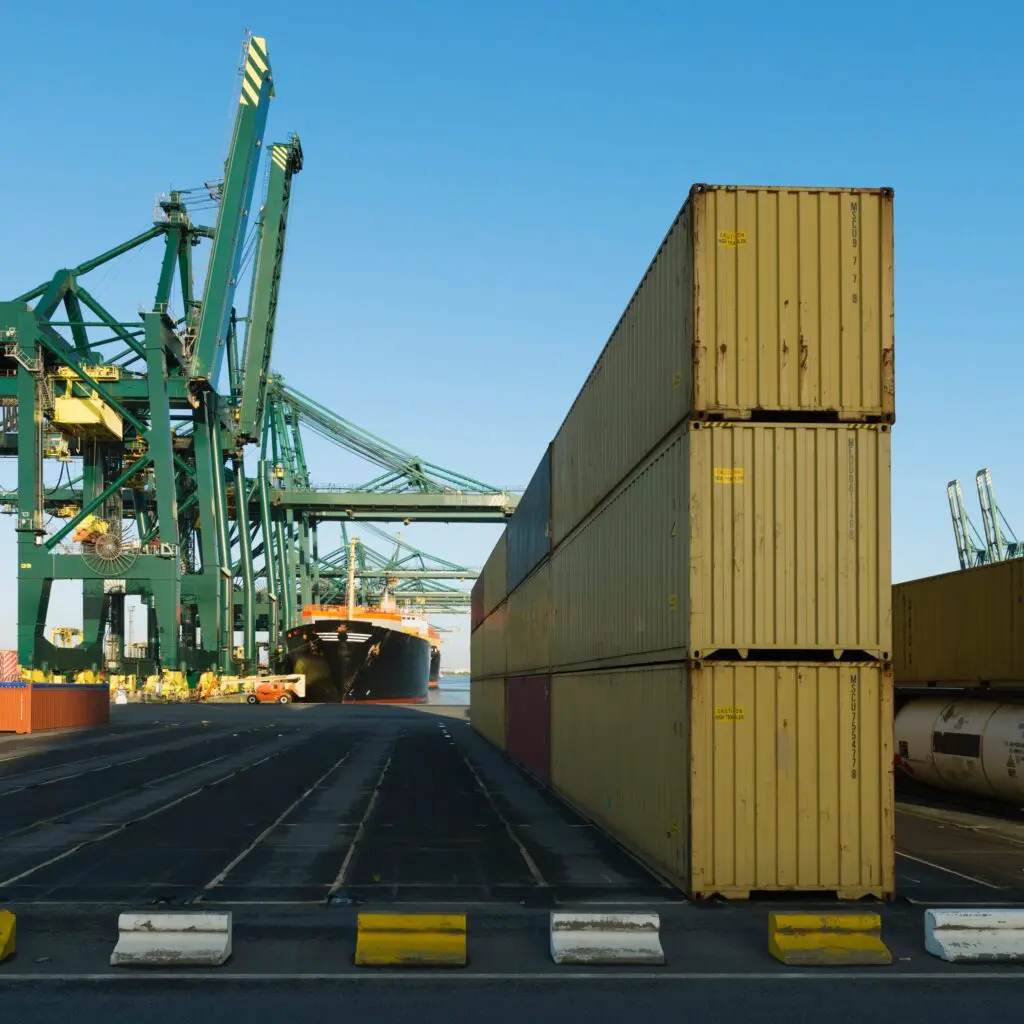
A clearBorder watching brief
Executive summaryThe 3 November US midterms delivered Democratic control of both chambers of Congress, creating a new political backdrop for President Trump’s trade agenda. But existing tariffs and restrictions remain in force, while international negotiations, regulatory disputes, and enforcement actions continue. |
Last updated: 9th November 2026 |
Here, we track the developments shaping US trade policy, what the election changes, and where firms may need to adjust their commercial strategy.
Tariffs are only one part of the story. Section 301, Section 232, import bans, procurement restrictions and negotiated trade arrangements all sit within the same commercial risk environment.
- Which Trump-era trade measures are becoming more aggressive?
- Which are stabilising through deals?
- Where could the run-up to November still change market access, cost, or sourcing assumptions?
This is an unusually active period of US trade policy, but not every trade intervention can be read as electorally motivated. For global firms, the commercial priority is understanding:
- Which changes represent temporary political pressure
- Which are part of a new long-term operating environment
- And, most importantly, how either affects commercial positioning
The context
|
Key watchpoints
|
For trade-responsive horizon scanning tailored to your business,
– Bookmark this page for live updates as the situation evolves. –
Washington extends the pause on export controls for affiliates of listed entities9th November 2026The US Bureau of Industry and Security has extended the suspension of its Affiliates Rule until 10 January 2027. The rule would automatically extend certain export control restrictions to companies owned 50% or more, directly or indirectly and individually or collectively, by specified restricted parties – even where the affiliates are not themselves listed. The extension delays implementation but does not withdraw the rule or remove existing restrictions on listed entities. → The trade lens: additional time gives businesses an opportunity to review ownership structures across customers, suppliers, and other counterparties. Use this window to identify potential licensing exposure and prepare for changes that could affect transactions when the suspension ends. |
China pushes tariff and shipping reprieves into January9th November 2026China has announced a further two-month suspension of its additional 24% tariffs on US goods, while retaining an additional 10% levy. Beijing has also extended its suspension of special port fees on US-linked vessels until 10 January 2027. → The trade lens: extensions provide further short-term certainty, but do not remove underlying trade tensions or all existing tariffs. Firms must distinguish temporary relief from permanent changes to duties, shipping costs, or market access. |
US extends 178 Section 301 tariff exclusions into January 20279th November 2026The Office of the US Trade Representative has extended all 178 existing Section 301 tariff exclusions for Chinese products until 9 January 2027, avoiding their scheduled expiry today. The decision provides another two months of relief for qualifying imports, while the underlying tariffs remain in place. Importers must still establish whether their products meet the relevant exclusion descriptions and classification requirements. → The trade lens: the extension offers short-term cost certainty, not a permanent change in tariff exposure. Businesses should confirm eligibility, maintain accurate landed-cost forecasts, and prepare for the next decision point in January. |
US-China tariff exclusions face 9 November deadline6th November 2026A tariff deadline is approaching for businesses importing Chinese goods into the US. The current exclusions (covering 178 specified products from additional Section 301 duties) are scheduled to expire on 9 November, unless the Office of the US Trade Representative announces a further extension. Despite the wider US–China trade truce running into January 2027, these product-specific exclusions have a separate expiry date. Without further action, affected imports could face additional duties from 10 November. → The trade lens: importers relying on Section 301 exclusions should verify product coverage, review landed-cost exposure, and monitor official decisions before the deadline. |
Canada sets out plans to reduce reliance on US trade5th November 2026Canada’s 2026 federal budget places trade diversification and domestic investment at the centre of Ottawa’s response to US tariff pressures. The government aims to double exports to markets outside the US by 2035, supported by investment incentives and trade infrastructure. The announcement follows Canada’s agreement with China to extend preferential market access for selected agricultural and seafood products until the end of 2028. → The trade lens: US trade tensions are accelerating efforts to diversify commercial relationships. For businesses operating across North America, this could reshape sourcing, investment, and export opportunities, even while existing US tariff measures remain in place. |
US trading partners weigh their next moves4th November 2026The Democrats’ congressional victories could shift the dynamics of US trade negotiations.
However, Trump’s continuing executive powers limit the prospect of immediate changes to existing trade measures. → The trade lens: the election may change negotiating leverage before it changes policy. Businesses should monitor developments in US–EU and US–Canada relations – and distinguish between diplomatic momentum and concrete changes to tariffs, agreements, or market access. |
Democrats take Congress – but Trump’s tariffs remain in place4th November 2026Democrats have won control of both the House and Senate in the 3 November midterm elections, creating a new political balance for the final two years of President Trump’s term. When the new Congress convenes on 3 January, Democratic lawmakers will have greater power to scrutinise policy and pursue legislation challenging existing tariffs. However, many trade measures rely on executive authorities – including Sections 232 and 301 – which remain available to the administration. Presidential veto powers could also complicate efforts to reverse existing measures through legislation. → The trade lens: the election changes the political pressures surrounding US trade policy, but not the duties businesses face today. Firms should continue planning against existing measures while monitoring congressional scrutiny, potential legislative challenges, and shifts in US trade negotiations. |
US–Canada trade talks regain momentum on eve of midterms1st November 2026Canadian PM Mark Carney reported constructive discussions with President Trump over a potential trade agreement. Negotiating teams are expected to work towards a deal in the coming weeks. Trump described having the “concept” of an agreement. This apparent thaw follows months of tariff escalation and stalled negotiations. Potential tariff relief for Canadian steel and automotive products are still under discussion, though no agreement has been finalised or new tariff changes announced. → The trade lens: improved relations may offer greater confidence in the direction of negotiations, but political assurances are not enforceable trade arrangements. Existing duties and restrictions remain the basis for commercial planning until the terms and implementation of any agreement are confirmed. |
Canada and EU launch alliance to deepen trade cooperation30th October 2026Canada and the EU have launched an Alliance for the Future, outlining closer cooperation on trade, digital regulation, critical minerals, energy, and strategic supply chains. The Montreal summit also saw the conclusion of negotiations on a new digital trade agreement and progress on arrangements to facilitate European investment in Canadian critical resources. → The trade lens: Canada is deepening its economic relationship with Europe. Firms must consider how new partnerships could create alternative sourcing, investment, and market opportunities, particularly where existing US arrangements are uncertain. |
US tightens import restrictions on Chinese genomics firms29th October 2026The US Department of Homeland Security has added three Chinese genomics companies – BGI Genomics, MGI Tech and Shenzhen BGI Technology – to its Uyghur Forced Labor Prevention Act Entity List. Effective 29 October, goods produced wholly or partly by these companies are presumed prohibited from entering the US unless importers can overcome that presumption. US authorities allege the companies’ activities are connected to forced-labour practices in Xinjiang; allegations the companies reject. → The trade lens: even as Washington and Beijing negotiate tariff stability, targeted import restrictions continue to tighten. For firms sourcing life-sciences tech and equipment, supplier visibility, traceability, and documentary evidence can determine whether goods reach the US market at all. |
Robotics and industrial machinery enter Section 232 negotiations28th October 2026The White House has issued a new Section 232 proclamation covering imported robotics, industrial machinery, and associated components. Following a national security investigation, President Trump directed US officials to negotiate agreements with trading partners, with a progress report required within 180 days. No immediate tariffs have been imposed, although further measures remain possible, depending on the negotiations. → The trade lens: national security scrutiny is extending deeper into the equipment that supports industrial production. Manufacturers dependent on imported automation systems should assess their exposure before negotiations translate into new duties, quotas, or other trade restrictions. |
Airbus financing dispute threatens US–EU tariff truce26th October 2026US Trade Representative Jamieson Greer has warned that a reported $3.4 billion European Investment Bank loan to Airbus could undermine the existing US–EU agreement suspending duties linked to the longstanding aircraft subsidy dispute. Washington has raised concerns about the financing arrangements, while Airbus maintains that the loan was agreed on commercial terms. No new tariffs have been announced. → The trade lens: businesses trading across the Atlantic should recognise that financing arrangements, industrial subsidies, and compliance with negotiated commitments can all influence the durability of market-access agreements. |
Canada tariff carve-outs show midterm pressure reaching trade policy23rd October 2026President Trump has modified the scope of the additional 50% tariffs on certain Canadian products – removing goods including plywood sheets, some paper products, certain machinery, refrigeration equipment, packing crates, and boxes, while adding other products to the tariff list. The changes take effect from 30 October. The White House framed the move as a refinement in the public interest rather than a broader de-escalation of the dispute. → The trade lens: this is one of the clearest examples yet of domestic electoral pressure intersecting with product-level tariff policy. Watch for further targeted exemptions or adjustments in politically sensitive sectors and states as 3 November approaches – but recognise that the wider US–Canada dispute remains unresolved. |
White House signals tariff policy could outlast a change in Congress20th October 2026US Treasury Secretary Scott Bessent has argued that a Democrat-controlled House would have limited ability to derail the administration’s trade agenda after the midterms – pointing to what he described as the government’s “very durable tariff authorities”. Republicans currently hold narrow majorities in both chambers, with control of Congress at stake on 3 November. His comments challenge the assumption that a change in congressional control would automatically produce a change in tariff policy. Much of the current trade agenda relies on executive authorities that can continue operating even amid greater congressional opposition. → The trade lens: firms should avoid treating the midterms as an automatic reset point for tariff exposure. The composition of Congress may affect political pressure, scrutiny, and future legislation – but many existing trade measures could remain part of the operating environment, regardless of the result. |
Forced labour tariffs face a fresh legal test30th September 2026The US Court of International Trade has heard a challenge to the forced labour tariffs imposed on 60 trading partners in July. Businesses and 25 Democratic-led states challenging the measures argued that the administration exceeded the tariff authority available to it, following the Supreme Court’s earlier rejection of Trump’s emergency-based reciprocal tariffs. The government is defending the new measures and their legal basis. Measures currently remain in place while the challenge proceeds. → The trade lens: importers should continue planning against measures currently in force, while tracking litigation that could alter their durability, scope, or the authorities the administration uses for future tariffs. |
US–China talks test durability of trade commitments24th September 2026President Trump hosts Chinese President Xi Jinping in Washington, with the two sides agreeing to extend their current trade truce until 10 January 2027. Beyond the extension, there was little sign of wider breakthroughs on trade, with implementation of existing commitments around market access, agricultural purchases, aircraft, and rare earth supply remaining under scrutiny. → The trade lens: US–China trade is currently sat somewhere between managed negotiation and tariff escalation. The extended truce offers businesses greater short-term certainty, but implementation of existing commitments – particularly around critical minerals – remains the key commercial watchpoint. |
German pharma pricing comes under Section 301 scrutiny22nd September 2026The Office of the US Trade Representative has held a public hearing into Germany’s pharmaceutical pricing policies. USTR argues that German practices may leave the United States carrying a disproportionate share of global R&D costs. The investigation specifically examines mechanisms including mandatory rebates and confidential pricing discounts. No tariffs have been imposed at this stage; the process remains under investigation. The significance lies in what is being investigated: in this case, Section 301 is being applied to another country’s domestic regulatory and pricing framework. → The trade lens: pharma businesses should watch whether the investigation leads to negotiated changes, formal Section 301 action, or wider scrutiny of EU pricing regimes. |
Canada dispute expands beyond tariffs16th September 2026The US–Canada trade dispute has moved beyond conventional customs duties into market access and government procurement. After additional 50% duties were imposed on selected Canadian products earlier in the summer, the White House announced on 8 September that certain Canadian motor vehicles and food and beverage products (such as alcohol and dairy) would be excluded from importation altogether from 29 September. Goods already imported but not yet entered for consumption remain subject to the earlier 50% duty. On 16 September, President Trump directed agencies to begin removing Canadian-origin goods from US federal civil procurement. The accompanying statement said that the administration had not agreed to renew USMCA in its current form. → The trade lens: this shows how quickly a bilateral dispute can move beyond duties into broader questions of market access and public procurement. Businesses with a Canadian presence especially should stress-test assumptions around cross-border sourcing, USMCA treatment, and access to US government demand. |
National security tariffs hit drones and critical components3rd September 2026New Section 232 tariffs have taken effect on certain unmanned aircraft systems (UAS) and components after the US government concluded that existing import dependence threatened national security. Specified large UAS, thermal-imaging systems, docking stations and critical components can face tariffs of 100%, while other covered systems face 25%. Certain products from the EU and other US trading partners receive lower tariff treatment. → The trade lens: security policy is becoming increasingly specific at product and component level. Origin, component sourcing, and access to allied country tariff treatment can materially change landed cost. |
Polysilicon tariffs reach upstream into tech supply chains6th August 2026The US has introduced Section 232 measures covering polysilicon and certain derivative products: materials that sit upstream of both semiconductor and solar supply chains. From 4 December, specified polysilicon ingots and derivatives will generally face an additional 15% tariff, while covered UK products will face a 10% rate. The proclamation also authorises a programme designed to incentivise investment in US production of raw polysilicon, ingots, wafers, and cells. → The trade lens: businesses should assess tariff exposure below the finished product – particularly where strategic inputs are concentrated several tiers upstream. |
US imposes tariffs on 60 economies over forced labour rules23rd July 2026USTR has imposed Section 301 tariffs on 60 trading partners, effective from 24 July, covering economies responsible for 99.4% of US imports. This follows investigations into whether they had imposed and effectively enforced bans on goods made with forced labour. Tariffs are generally set at 10% or 12.5%, with differentiated treatment and exemptions for selected products and economies. The UK is among the countries subject to the 10% rate. → The trade lens: forced labour enforcement is both a supply chain compliance issue and a direct source of tariff exposure. More broadly, the action shows tariffs being used to influence other countries’ domestic import control regimes. |
For trade-responsive horizon scanning tailored to your business,